จดหมายข่าวฉบับที่ 12 เดือนตุลาคม - ธันวาคม 2568
|
|
|---|
|
|
เรื่องน่าสนใจประจำฉบับ
-
เอกสาร World Bank:
Parenting Programs to Promote the Nurturing Care of Children: Essential Considerations (ปี 2025)
- องค์การอนามัยโลก (WHO) เผยแพร่รายงานวิชาการ “Corporal Punishment of Children: The Public Health Impact”(เผยแพร่ 11 สิงหาคม 2025) ชี้ให้เห็นว่าการลงโทษเด็กด้วยความรุนแรงทางกายยังเกิดขึ้นอย่างกว้างขวางทั่วโลก
- UNICEF ร่วมกับ Parenting for Lifelong Health (PLH) และได้รับการสนับสนุนจากภาคี Global Initiative to Support Parents (GISP) ได้แก่ WHO, ECDAN และ IRC ได้พัฒนา Global Parenting Support Framework หรือ “กรอบแนวคิดระดับโลกสำหรับการสนับสนุนการเลี้ยงดูแบบถ้วนหน้า”
-
Global Caregiver Forum, Madrid, 15-16 January 2026
จะจัดขึ้นวันที่ 15–16 มกราคม 2569 (2026) โดยเป็นเวทีระดับโลกด้าน “การสนับสนุนผู้ดูแลเด็ก/พ่อแม่ผู้ปกครอง”
|
|
|---|
|
|
|
For the English newsletter please click Here
or scroll down to the end and click at
'view the entire message'
|
|
|---|
|
สารจากกรรมการ
สวัสดีสมาชิกทุกท่านและผู้รับจดหมายข่าว!
ขอต้อนรับสู่จดหมายข่าว ฉบับที่ 12 ประจำไตรมาส เดือนตุลาคม–ธันวาคม 2569 ค่ะ ตลอดไตรมาสที่ผ่านมา เครือข่ายของเราได้ร่วมกันขับเคลื่อนกิจกรรมอย่างต่อเนื่อง ทั้งการสัมมนาออนไลน์ การเผยแพร่จดหมายข่าว และการเพิ่มทรัพยากรใหม่ ๆ บนเว็บไซต์ CoP กิจกรรมเหล่านี้ไม่เพียงช่วยให้เกิดการแลกเปลี่ยนเรียนรู้ที่เป็นประโยชน์ แต่ยังทำให้เราเห็นพลังของการทำงานร่วมกันที่ค่อย ๆ ขยายผลไปสู่การสร้างระบบสนับสนุนการเลี้ยงดูเด็กเชิงบวกที่เข้มแข็งขึ้นในประเทศไทย
เราขอขอบคุณสมาชิกทุกท่านที่ร่วมกัน “เติมเต็ม” เครือข่ายนี้ด้วยการเข้าร่วมกิจกรรม แบ่งปันประสบการณ์ภาคสนาม และส่งต่อองค์ความรู้ที่นำไปใช้ได้จริง ความร่วมมือของทุกคนคือหัวใจสำคัญที่ทำให้ CoP เติบโตอย่างมีความหมาย และเชื่อมโยงงานเชิงวิชาการกับการปฏิบัติในพื้นที่ได้ใกล้ชิดยิ่งขึ้น เมื่อมองไปข้างหน้า ในไตรมาสถัดไปและช่วงต่อเนื่องสู่ปีหน้า เราจะยังคงเดินหน้ากิจกรรมหลักอย่างสม่ำเสมอ ได้แก่ การสัมมนาออนไลน์แบบรายสองเดือน จดหมายข่าวรายไตรมาส และการเผยแพร่ คู่มือ งานวิจัย และบทเรียนจากภาคสนาม เพื่อให้สมาชิกสามารถนำไปปรับใช้กับการทำงานจริงได้ทันที ในขณะเดียวกัน เราตั้งใจให้ “ปีหน้า” เป็นอีกหนึ่งก้าวสำคัญของเครือข่าย ผ่านการขยายพื้นที่การเรียนรู้ การต่อยอดคลังทรัพยากรให้เข้าถึงง่ายขึ้น และการสนับสนุนให้เกิดการแลกเปลี่ยนแบบ “ข้ามพื้นที่” มากขึ้น เพื่อให้บทเรียนจากแต่ละจังหวัด/หน่วยงานสามารถส่งต่อและเสริมพลังกันได้จริง
เราขอเชิญชวนทุกท่านร่วมแบ่งปันแหล่งข้อมูล เครื่องมือ หรือกิจกรรมที่เป็นประโยชน์ให้กับเครือข่าย และสามารถติดต่อ
คุณโย ชุตินันท์ ผู้ประสานงาน CoP ได้ที่ chutinan.s@pcfthailand.org เพื่อส่งข้อเสนอแนะ ประเด็นที่อยากให้ CoP หยิบยก หรือทรัพยากรที่ต้องการเผยแพร่ร่วมกัน นอกจากนี้ เพื่อให้การสื่อสารเข้าถึงได้สะดวกและต่อเนื่องมากยิ่งขึ้น ขณะนี้เรายังมี Facebook Page ของ CoPได้ที่ https://www.facebook.com/TPPCoP เป็นอีกหนึ่งช่องทางสำหรับการประชาสัมพันธ์ อัปเดตข่าวสาร และเปิดพื้นที่แลกเปลี่ยนความคิดเห็นในวงกว้าง ควบคู่ไปกับการใช้งานเว็บไซต์
ทีมกรรมการร่วมร่วมและทีมสนับสนุนเชื่อมั่นว่า ด้วยความร่วมมือและเสียงของทุกคน เครือข่ายของเราจะสามารถสร้างพื้นที่การเลี้ยงดูเด็กเชิงบวกที่ปลอดภัย เข้มแข็ง และยั่งยืนต่อไปได้ ขอส่งกำลังใจให้ทุกท่านมีพลังในการทำงาน เต็มไปด้วยแรงบันดาลใจ และประสบความสำเร็จในทุกมิติของชีวิตและการทำงานในช่วงปลายปีนี้ค่ะ
ขอแสดงความนับถือ,
ดร. สมบัติ ตาปัญญา
ดร. แอมมาลี แม็คคอย
ดร. ปนัดดา ธนเศรษฐกร
|
|
|---|
|
|
|
|---|
|
|
1. มูลนิธิแพธทูเฮลท์ (Path2Health Foundation: P2H)
เป็นองค์กรพัฒนาเอกชนสาธารณประโยชน์ที่จดทะเบียนในประเทศไทยเมื่อวันที่ 2 พฤษภาคม 2556 และสานต่องานเดิมขององค์การแพธ (PATH) ประเทศไทยที่ดำเนินงานมาตั้งแต่ปี 2528 โดยมุ่ง “สร้างสรรค์นวัตกรรม” เพื่อพัฒนาสุขภาพและคุณภาพชีวิตของประชากรไทย ผ่านกระบวนการทำงานแบบมีส่วนร่วมและความร่วมมือกับภาคีหลากหลายภาคส่วน.
พันธกิจ/แนวทางการทำงานหลัก ของ P2H ได้แก่ การพัฒนาองค์ความรู้และการเรียนรู้เพื่อสร้างสุขภาวะ การพัฒนาศักยภาพหน่วยงาน/องค์กรให้จัดกิจกรรมส่งเสริมสุขภาวะได้ การพัฒนานวัตกรรมเพื่อเพิ่มการเข้าถึงข้อมูลและบริการสุขภาพ การออกแบบกระบวนการเปลี่ยนแปลงพฤติกรรมสุขภาพให้สอดคล้องกับวัฒนธรรมและวิถีชีวิตของกลุ่มเป้าหมาย รวมถึงการทำงานเชิงนโยบายเพื่อความเท่าเทียมด้านสุขภาวะ และการสนับสนุนกลยุทธ์ร่วมกับภาครัฐและเอกชน.
|
|
|
|
ตัวอย่างการทำงาน ครอบคลุมประเด็นเด็ก เยาวชน ครอบครัว และสุขภาวะทางเพศ เช่น โครงการด้านสุขภาวะทางจิตเด็ก-เยาวชน-ครอบครัว, งานป้องกันการรังแก (Stop Bullying), งานเพศวิถีศึกษาและการสื่อสารในครอบครัวเพื่อป้องกันการตั้งครรภ์ในวัยรุ่น, โครงการเชิงพื้นที่ร่วมกับองค์กรปกครองส่วนท้องถิ่นเพื่อสุขภาวะเยาวชน และโครงการส่งเสริมการเลี้ยงดูเชิงบวกในบริบทสถานประกอบการ.
สามารถศึกษาข้อมูลเพิ่มเติมได้ที่
https://path2health.or.th/
|
|
|---|
|
|
2. มูลนิธิพิทักษ์สตรี (Alliance Anti Trafic: AAT)
เป็นองค์กรไม่แสวงหากำไรที่ทำงานปกป้อง คุ้มครอง และเสริมพลังผู้หญิงและเด็กผู้หญิงที่เผชิญความเสี่ยงหรือเป็นผู้เสียหายจากความรุนแรงทางเพศและการแสวงประโยชน์ทุกรูปแบบ รวมถึงการคุกคาม/ล่วงละเมิด การบังคับแต่งงาน การตั้งครรภ์แทนผิดกฎหมาย และการค้ามนุษย์ทางเพศ.
AAT ทำงานร่วมกับชุมชน โรงเรียน และภาคีเครือข่าย เพื่อสนับสนุนการป้องกัน การคุ้มครอง และการเข้าถึงความช่วยเหลือที่เหมาะสม โดยมุ่งลดความเสี่ยงและยุติความรุนแรงทางเพศต่อผู้หญิงและเด็กผู้หญิงในภูมิภาคเอเชียตะวันออกเฉียงใต้.
|
|
|
|
|---|
|
|
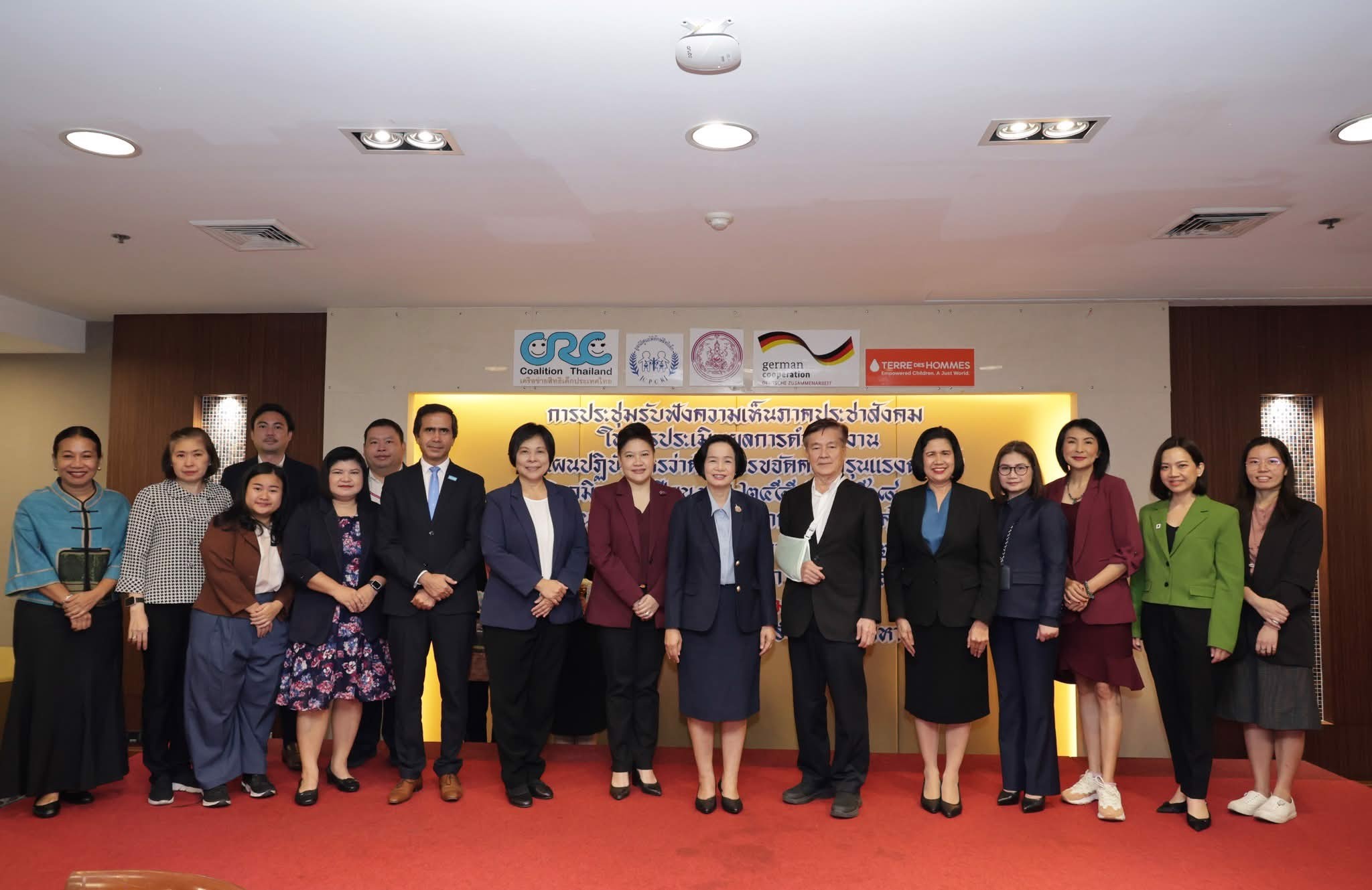
กรมกิจการเด็กและเยาวชน ร่วมกับ มูลนิธิศูนย์พิทักษ์สิทธิเด็ก และ เครือข่ายสิทธิเด็กประเทศไทยจัดการประชุม National Consultation
|
|
|---|
|
เมื่อวันที่ 28 ตุลาคม 2568 เพื่อพิจารณาและปรับปรุง ร่างรายงานผลการดำเนินงานของประเทศไทย ในวาระสิ้นสุด (พ.ศ. 2559–2568) ของ
-
แผนปฏิบัติการว่าด้วยการขจัดความรุนแรงต่อเด็กในภูมิภาคอาเซียน และ
-
แผนปฏิบัติการระดับภูมิภาคว่าด้วยการคุ้มครองเด็กจากการแสวงประโยชน์ในสื่อออนไลน์ในอาเซียน (พ.ศ. 2563–2568)
การประชุมครั้งนี้มีหน่วยงานทั้งภาครัฐและภาคประชาสังคมร่วมกันทบทวนร่างรายงาน แก้ไข เติมข้อมูล และช่วยรวบรวมข้อมูลผลการดำเนินงานของหน่วยงานที่ไม่สามารถเข้าร่วมได้ สะท้อนพลังความร่วมมือและการทำงานเชื่อมประสานที่ทำให้เห็นภาพการขับเคลื่อนงานคุ้มครองเด็กของประเทศอย่างรอบด้าน นอกจากนี้ ที่ประชุมยังได้แลกเปลี่ยน “ประเด็นโอกาส” เพื่อยกระดับการทำงานยุติความรุนแรงต่อเด็กในระยะต่อไป
ขอขอบคุณ คุณวันชัย รุจนวงศ์ อดีตผู้แทนไทยด้านสิทธิเด็กในคณะกรรมการอาเซียนว่าด้วยการคุ้มครองและส่งเสริมสิทธิสตรีและสิทธิเด็ก (ACWC) ที่ทำหน้าที่นำการประชุม รวมถึงทีมงานกรมกิจการเด็กและเยาวชน เครือข่ายสิทธิเด็กประเทศไทย หน่วยงานที่เกี่ยวข้อง และทีมมูลนิธิศูนย์พิทักษ์สิทธิเด็กที่ร่วมทำงานกันอย่างเข้มแข็งและต่อเนื่องเสมอมา.
|
|
|---|
|
สถาบันสุขภาพจิตเด็กและวัยรุ่นภาคตะวันออกเฉียงเหนือ
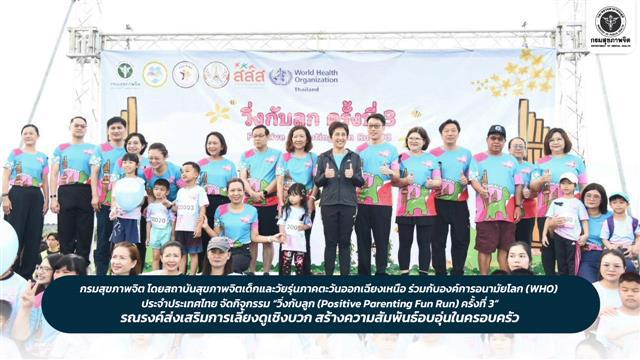
ร่วมกับ องค์การอนามัยโลก (WHO) ประเทศไทย จัดกิจกรรม “วิ่งกับลูก
(Positive Parenting Fun Run) ครั้งที่ 3”
|
|
|---|
|
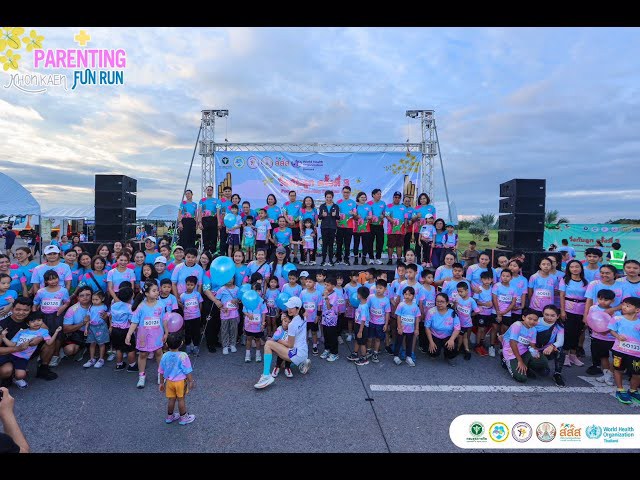
เมื่อวันที่ 2 พฤศจิกายน 2568 กรมสุขภาพจิต โดย ณ สวนสาธารณะบึงทุ่งสร้าง จังหวัดขอนแก่น เพื่อรณรงค์ส่งเสริม การเลี้ยงดูเชิงบวก และสร้างความสัมพันธ์ที่อบอุ่นระหว่างพ่อแม่กับลูก โดยมี พญ.ณิชาภา สวัสดิกานนท์ รองอธิบดีกรมสุขภาพจิต เป็นประธานเปิดงาน พร้อมด้วยผู้แทน WHO หน่วยงานท้องถิ่น และภาคีเครือข่ายร่วมสนับสนุน
กิจกรรมภายในงานประกอบด้วยการวิ่งเพื่อสุขภาพ เกมสร้างสัมพันธ์ในครอบครัว และกิจกรรมให้ความรู้ด้านการเลี้ยงดูเชิงบวก รวมถึง กิจกรรม 5 ฐาน ได้แก่
ฐานกอดสร้างรัก ฐานชมสร้างสุข ฐานสร้างสารสื่อใจ ฐานเวลาสร้างสุข และฐานสร้างพ่อแม่เลี้ยงบวกซึ่งออกแบบเพื่อเสริมทักษะการสื่อสารเชิงบวกและการใช้เวลาคุณภาพในครอบครัว ทั้งนี้ กิจกรรม “วิ่งกับลูก” จัดต่อเนื่องมาแล้วในจังหวัดเชียงใหม่ (ครั้งที่ 1–2)
มีผู้เข้าร่วมกว่า 800 คน และความพึงพอใจเฉลี่ย 84.7% สะท้อนความสำเร็จและความจำเป็นในการขยายองค์ความรู้ด้านการเลี้ยงดูเชิงบวกสู่ครอบครัวไทยทุกภูมิภาค โดยสอดคล้องกับโครงการความร่วมมือ “Scaling Up Evidence-Based Parenting Interventions in Thailand” ของกรมสุขภาพจิตและ WHO เพื่อเสริมสร้างครอบครัวเข้มแข็งและสุขภาพจิตที่ดีอย่างยั่งยืน.
|
|
|---|
|
กรมกิจการเด็กและเยาวชน (พม.) ร่วมกับภาคีเครือข่าย
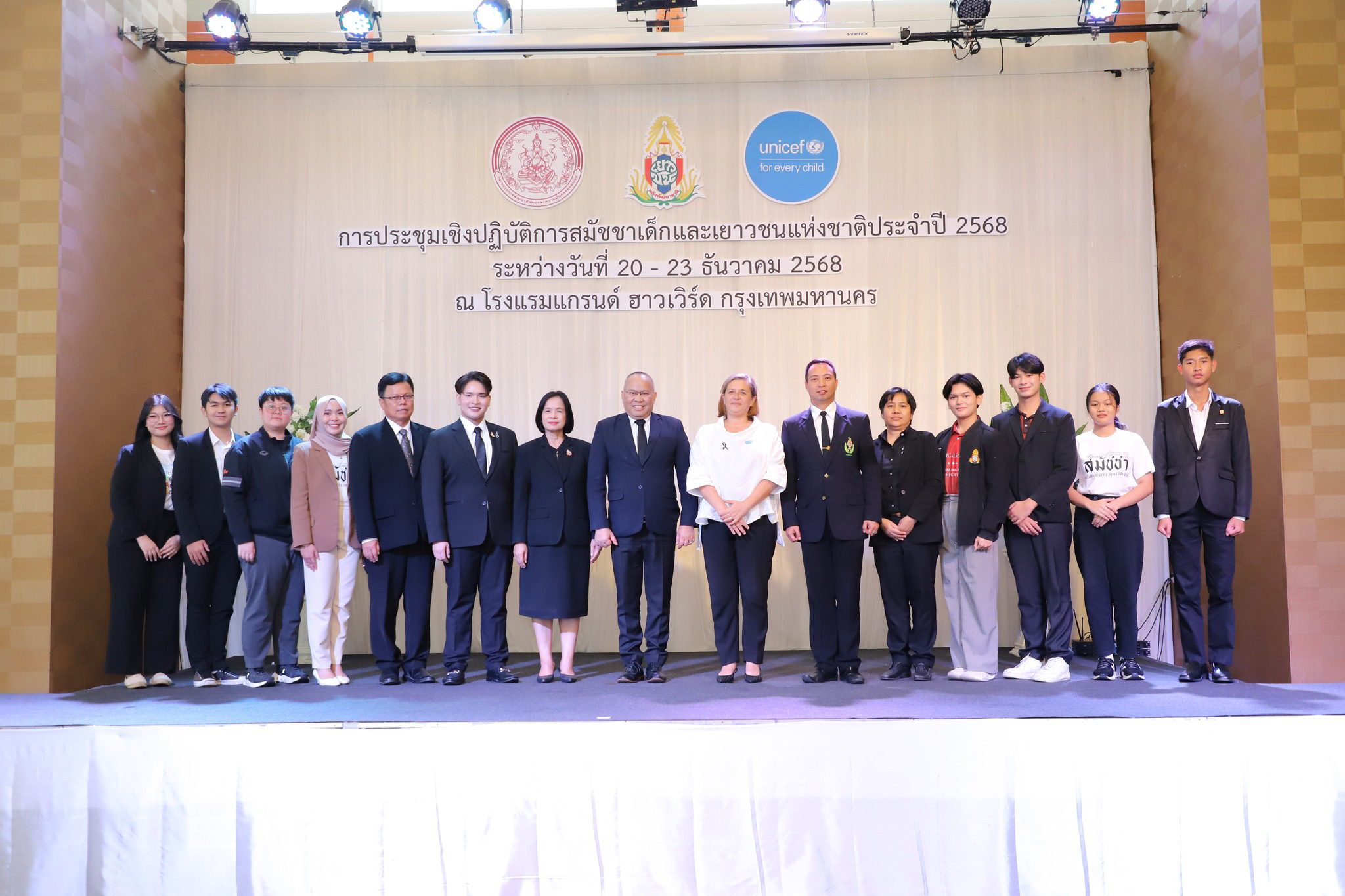
จัดพิธีปิดการประชุมเชิงปฏิบัติการ สมัชชาเด็กและเยาวชนแห่งชาติ ประจำปี 2568
|
|
|---|
|
เมื่อวันอังคารที่ 23 ธันวาคม 2568 ณ โรงแรมแกรนด์ ฮาวเวิร์ด กรุงเทพมหานคร โดย นายกิตติ อินทรกุล รองปลัดกระทรวง พม. เป็นประธานในพิธี พร้อมรับฟังการนำเสนอ แผนปฏิบัติการตามยุทธศาสตร์ 10 ปีแบบมีส่วนร่วม และรับ 6 มติสมัชชาเด็กและเยาวชนแห่งชาติ จากตัวแทนเด็กและเยาวชนทั่วประเทศ เพื่อมุ่งบูรณาการการทำงานร่วมกับหน่วยงานที่เกี่ยวข้องและขับเคลื่อนสู่การปฏิบัติอย่างเป็นรูปธรรม
การประชุมครั้งนี้มี นางอภิญญา ชมภูมาศ อธิบดีกรมกิจการเด็กและเยาวชน, นางเซเวอรีน ลีโอนาดี รักษาการผู้แทนยูนิเซฟประเทศไทย และ นายชินท์ณภัทร โต๊ะเส็น ประธานสภาเด็กและเยาวชนแห่งประเทศไทย ร่วมให้ข้อคิดเห็น โดยเปิดพื้นที่ให้เด็กและเยาวชนแลกเปลี่ยนมุมมองอย่างสร้างสรรค์ สะท้อนประเด็นสำคัญในพื้นที่ และนำเสนอแนวทางการขับเคลื่อนระดับจังหวัดอย่างสอดคล้องกับปัญหา ความต้องการ และศักยภาพของเด็กและเยาวชนแต่ละพื้นที่
ผู้เข้าร่วมรวม 150 คน จาก สภาเด็กและเยาวชน 77 จังหวัด และเด็กและเยาวชนจาก 38 องค์กร รวมถึงเครือข่ายและสภาเด็กและเยาวชนแห่งประเทศไทย
|
|
|---|
|
สสส. เผยข้อมูล Thai Health Watch 2026 ชี้ว่า “สุขภาวะเด็กและเยาวชน”
เป็นประเด็นที่ต้องจับตาเป็นพิเศษในปี 2569
|
|
|---|
|
สสส. เผยข้อมูล ThaiHealth Watch 2026 ชี้ว่า “สุขภาวะเด็กและเยาวชน” เป็นประเด็นที่ต้องจับตาเป็นพิเศษในปี 2569
โดยเชื่อมโยงกับบริบท “เด็กเกิดน้อย” และการต้องเร่งลงทุนด้านคุณภาพเด็กตั้งแต่ช่วงต้นของชีวิตเพื่อลดปัจจัยเสี่ยงที่จะสะสมเป็นปัญหาใหญ่ในอนาคต รายงานเตือน 4 ภัยสุขภาพสำคัญ ที่กระทบเด็กไทย ได้แก่
-
วิกฤตพัฒนาการเด็กปฐมวัย (0–6 ปี) ต้องลงทุน/สร้างระบบสนับสนุนพัฒนาการตั้งแต่วัยแรกเริ่ม รวมถึงพื้นที่ “เล่นอิสระ” ในชุมชน
-
เด็กอ้วน ไม่ใช่แค่เรื่องอาหาร แต่เป็นพฤติกรรมที่ฝังในบ้านและโรงเรียน และสัมพันธ์กับความเสี่ยงโรค NCDs และผลต่อการเรียนรู้
-
พนันออนไลน์ในเยาวชน สสส. ชี้ความเสี่ยงจาก “คลิกแรก” ที่อาจนำไปสู่หนี้และการเสพติด พร้อมย้ำความจำเป็นของภูมิคุ้มกันรู้เท่าทันสื่อ/ออนไลน์
-
ความปลอดภัยทางถนน โดยเฉพาะอุบัติเหตุรถจักรยานยนต์ที่กระทบเด็กอย่างมาก และอัตราการสวมหมวกกันน็อกของเด็กยังต่ำ
โดยรวม ข่าวนี้ชี้ให้เห็นว่า การยกระดับสุขภาวะเด็กไทยต้องทำควบคู่ทั้ง การลงทุนเชิงระบบตั้งแต่ปฐมวัย การสร้างสภาพแวดล้อมในบ้าน-โรงเรียน การคุ้มครองเด็กในโลกออนไลน์ และมาตรการความปลอดภัยทางถนน เพื่อรับมือความท้าทายในยุคเด็กเกิดน้อยอย่างจริงจัง
|
|
|---|
|
ผู้แทนจาก กรมกิจการสตรีและสถาบันครอบครัว (สค.) เข้าร่วมประชุมกับ
คณะอนุกรรมาธิการกิจการสตรีและผู้มีความหลากหลายทางเพศ สมาชิกวุฒิสภา
|
|
|---|
|
ผู้แทนจาก กรมกิจการสตรีและสถาบันครอบครัว (สค.) เข้าร่วมประชุมกับ คณะอนุกรรมาธิการกิจการสตรีและผู้มีความหลากหลายทางเพศ สมาชิกวุฒิสภา
เมื่อวันที่ 23 ธันวาคม 2568 เวลา 09.30 น. ณ ห้องประชุม 203 ชั้น 2 อาคารรัฐสภา ภายใต้คณะกรรมาธิการการพัฒนาสังคมและกิจการเด็ก เยาวชน สตรี ผู้สูงอายุ คนพิการ ผู้ด้อยโอกาส และความหลากหลายทางสังคม วุฒิสภา โดยมี นางอจลา ณ ระนอง เป็นประธานการประชุม
ในการนี้ นางจตุพร โรจนพานิช อธิบดีกรมกิจการสตรีและสถาบันครอบครัว มอบหมายให้ นางนัฏญา วรชินา ผู้อำนวยการกองส่งเสริมสถาบันครอบครัว เข้าร่วมเพื่อให้ข้อมูลประกอบการพิจารณา “แนวทางการส่งเสริมบทบาทของสตรีในพื้นที่” ในการขับเคลื่อนงาน ป้องกันและแก้ไขความรุนแรงในครอบครัว ผ่านกลไก อาสาสมัครพัฒนาสังคมและความมั่นคงของมนุษย์ (อพม.)
โดยมี น.ส.กฤษฎี บุญสวยขวัญ ผู้อำนวยการกลุ่มคุ้มครองและพิทักษ์สิทธิ และ น.ส.กานต์ธิดา ขุนชิต นักพัฒนาสังคมปฏิบัติการ ร่วมเข้าประชุมด้วย การประชุมครั้งนี้สะท้อนความร่วมมือระหว่างหน่วยงานภาครัฐและกลไกฝ่ายนิติบัญญัติในการติดตามและผลักดันแนวทางเชิงระบบ เพื่อเสริมพลังสตรีในระดับพื้นที่ และยกระดับการป้องกันความรุนแรงในครอบครัวให้เกิดผลอย่างเป็นรูปธรรมในระยะต่อไป.
|
|
|---|
|
1. สถาบันแห่งชาติเพื่อการพัฒนาเด็กและครอบครัว (NICFD)
ชวนเด็ก ๆ และครอบครัวมาสนุก–เรียนรู้ ฟรี!
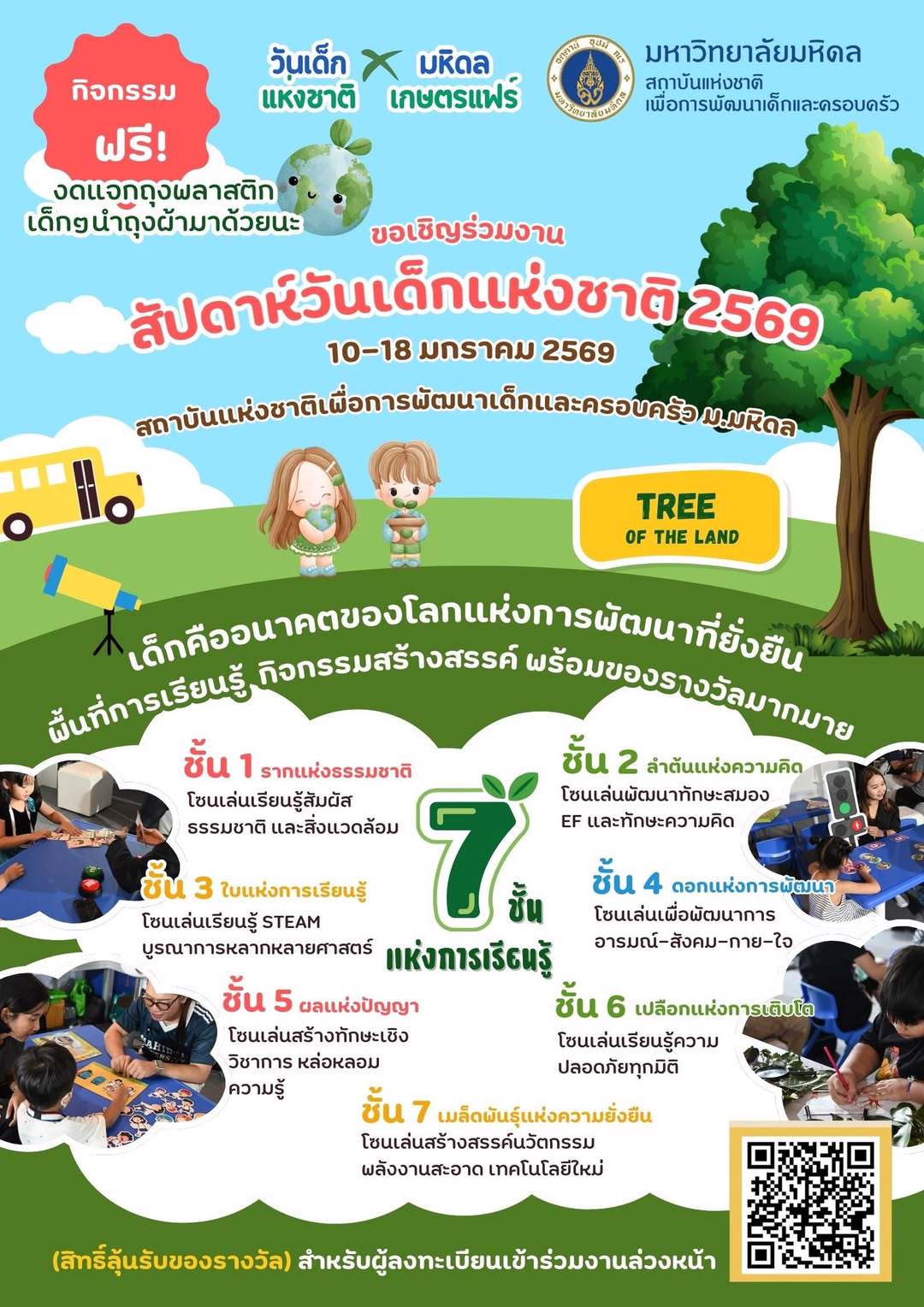
ขอเชิญร่วมงาน สัปดาห์วันเด็กแห่งชาติ × มหิดลเกษตรแฟร์ 2569 ภายใต้แนวคิด “เด็กคืออนาคตของโลกแห่งการพัฒนาที่ยั่งยืน” จัดขึ้นระหว่างวันที่ 10–18 มกราคม 2569 ณ สถาบันแห่งชาติเพื่อการพัฒนาเด็กและครอบครัว (NICFD) มหาวิทยาลัยมหิดล ภายในงานพบกับนิทรรศการ “TREE OF THE LAND – 7 ชั้นแห่งการเรียนรู้” โซนกิจกรรมสร้างสรรค์ เวิร์กชอปสนุก ๆ และลุ้นของรางวัลมากมาย เข้าร่วมฟรีตลอดงาน
โดยสามารถ ลงทะเบียนล่วงหน้า ได้ที่: https://form.jotform.com/253508165380053
ร่วมกันสร้างพื้นที่การเรียนรู้เพื่ออนาคตที่ยั่งยืนของเด็กไทย ทั้งนี้ งดแจกถุงพลาสติก ขอความร่วมมือให้เด็ก ๆ และครอบครัว นำถุงผ้ามาด้วย
|
|
|
|
|
2. Net PAMA
ข่าวดีสำหรับพ่อแม่ผู้ปกครองจังหวัดขอนแก่น!
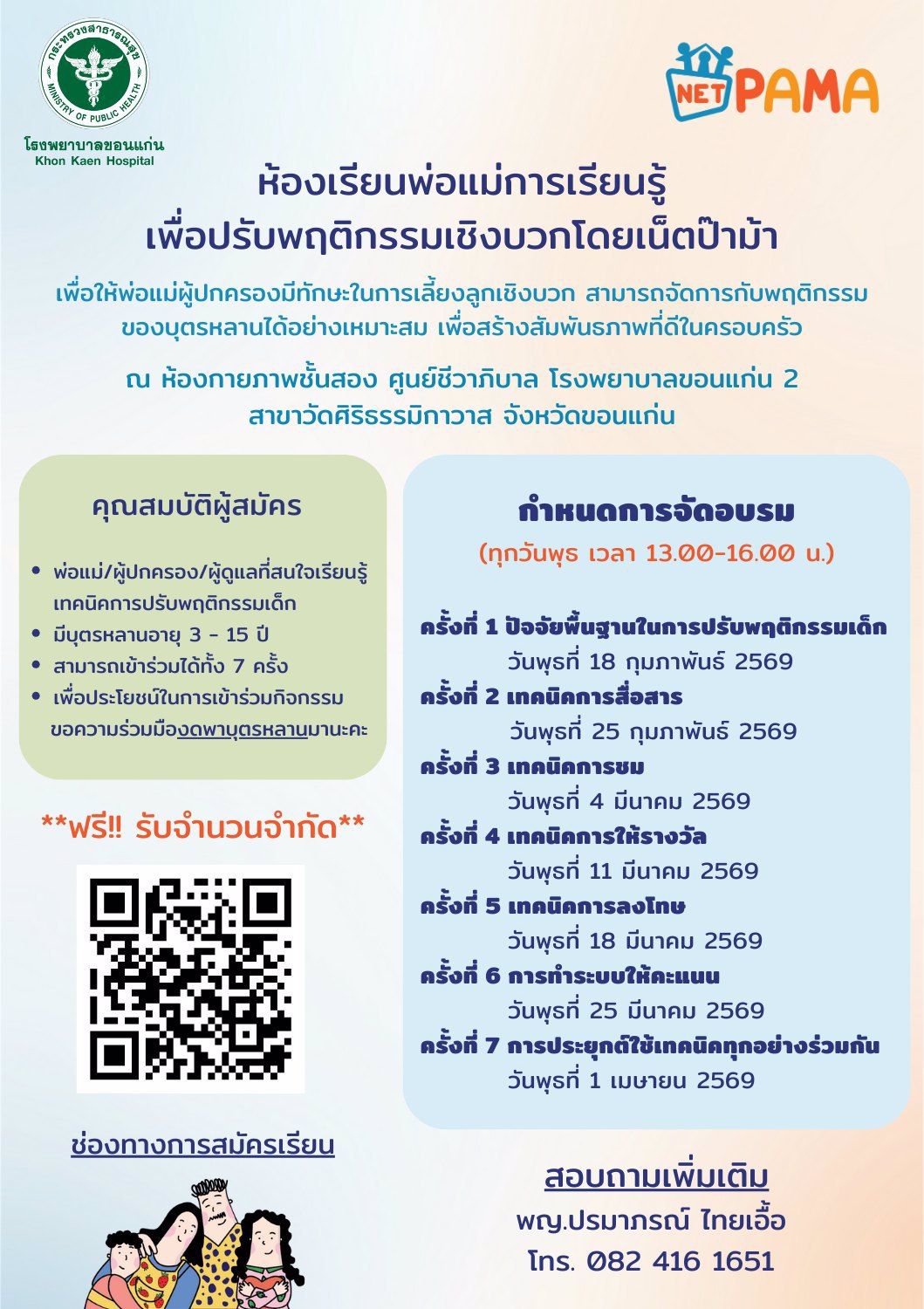
ขอเชิญชวนพ่อแม่/ผู้ปกครองที่มีบุตรอายุ 3–15 ปี เข้าร่วม “ห้องเรียนพ่อแม่: การเรียนรู้เพื่อปรับพฤติกรรมเชิงบวก (เน็ตป๊าม้า)” จัดอบรม สัปดาห์ละ 1 ครั้ง ทุกวันพุธ เวลา 13.00–16.00 น. ณ ห้องกายภาพ ชั้น 2 ศูนย์ชีวาภิบาล โรงพยาบาลขอนแก่น 2 (สาขาวัดศิริธรรมิกาวาส)
หลักสูตรเป็นการเรียนรู้แบบ “ขั้นบันได” ต่อเนื่อง เชื่อมโยงกัน ครอบคลุมหัวข้อสำคัญ เช่น ปัจจัยพื้นฐานการปรับพฤติกรรมเด็ก ทักษะการสื่อสารเชิงบวก เทคนิคการชม การให้รางวัล การลงโทษอย่างเหมาะสม ระบบให้คะแนน และการประยุกต์ใช้เทคนิคต่าง ๆ ร่วมกัน เพื่อช่วยให้พ่อแม่ผู้ปกครองนำไปใช้ได้จริงในชีวิตประจำวัน
เข้าร่วมฟรี ไม่มีค่าลงทะเบียน (รับจำนวนจำกัด) สมัครได้ที่: https://forms.gle/EtxHDB7rjfVaChZA8
|
|
|
|
|
3. สถาบันพัฒนาการเด็กราชนครินทร์ จ.เชียงใหม่
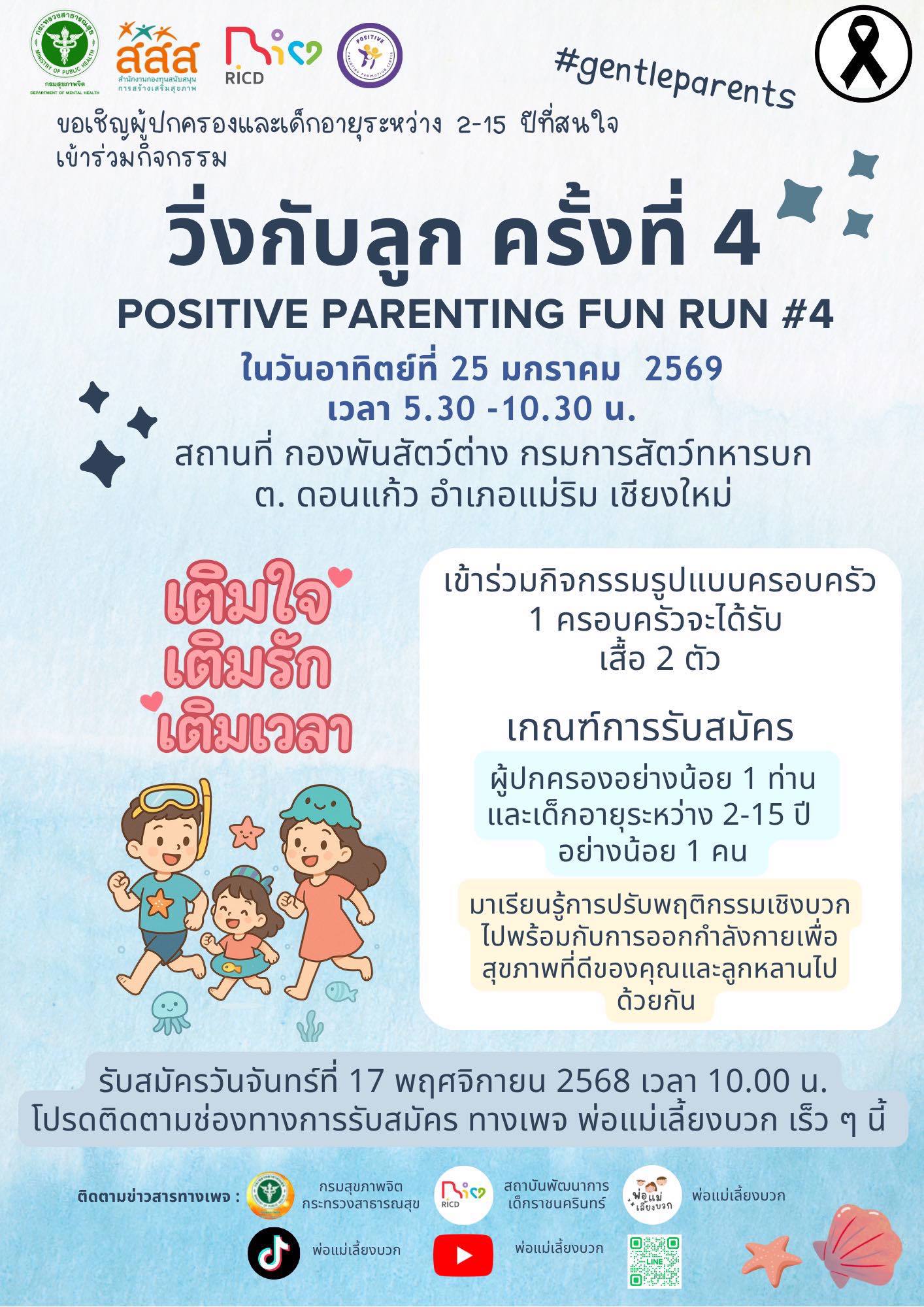
กลับมาแล้ว! “วิ่งกับลูก ครั้งที่ 4 (Positive Parenting Fun Run #4)”
กรมสุขภาพจิต โดย สถาบันพัฒนาการเด็กราชนครินทร์ ร่วมกับ สำนักงานกองทุนสนับสนุนการสร้างเสริมสุขภาพ (สสส.)และภาคีเครือข่าย ขอเชิญผู้ปกครองและเด็กเข้าร่วมกิจกรรมรูปแบบครอบครัว ในวันอาทิตย์ที่ 25 มกราคม 2569 เวลา 05.30–10.30 น. ณ กองพันสัตว์ต่าง กรมการสัตว์ทหารบก ต.ดอนแก้ว อ.แม่ริม จ.เชียงใหม่
ขอเชิญ ผู้ปกครองอย่างน้อย 1 ท่าน และ เด็กอายุ 2–15 ปี อย่างน้อย 1 คน เข้าร่วมเพื่อเรียนรู้การปรับพฤติกรรมเชิงบวกควบคู่ไปกับการออกกำลังกายเพื่อสุขภาพที่ดีของทั้งครอบครัว โดย 1 ครอบครัวจะได้รับเสื้อ 2 ตัว
เปิดรับสมัครวันจันทร์ที่ 17 พฤศจิกายน 2568 เวลา 10.00 น. เข้าร่วม ฟรี ไม่มีค่าลงทะเบียน (รับจำนวนจำกัด) โปรดติดตามรายละเอียดการรับสมัครผ่านเพจ “พ่อแม่เลี้ยงบวก” เร็ว ๆ นี้
#เติมใจเติมรักเติมเวลา #พ่อแม่เลี้ยงบวก #gentleparent https://www.facebook.com/PositiveParentRICD
|
|
|
|
|
งานวิจัย 1:
ผลของโปรแกรมฝึกทักษะการเลี้ยงดูต่อหน้าที่บริหารของเด็กอายุ 2–5 ปี: การวิจัยแบบกึ่งทดลอง
ผู้แต่ง
-
นิราภรณ์ ศิริพร,
-
เรณู ผูกบุญมี,
-
อาภวัน นุกอง,
-
และณัฐกมล ชาญสถิตพร.
ระเบียบวิธีวิจัย: การวิจัยแบบกึ่งทดลอง.
วารสาร: The Pacific Rim International.
ปี: 2568
ลิงค์เพื่อศึกษาเพิ่มเติม:
https://he02.tci-thaijo.org/index.php/PRIJNR/article/view/272059
|
|
|
|
|
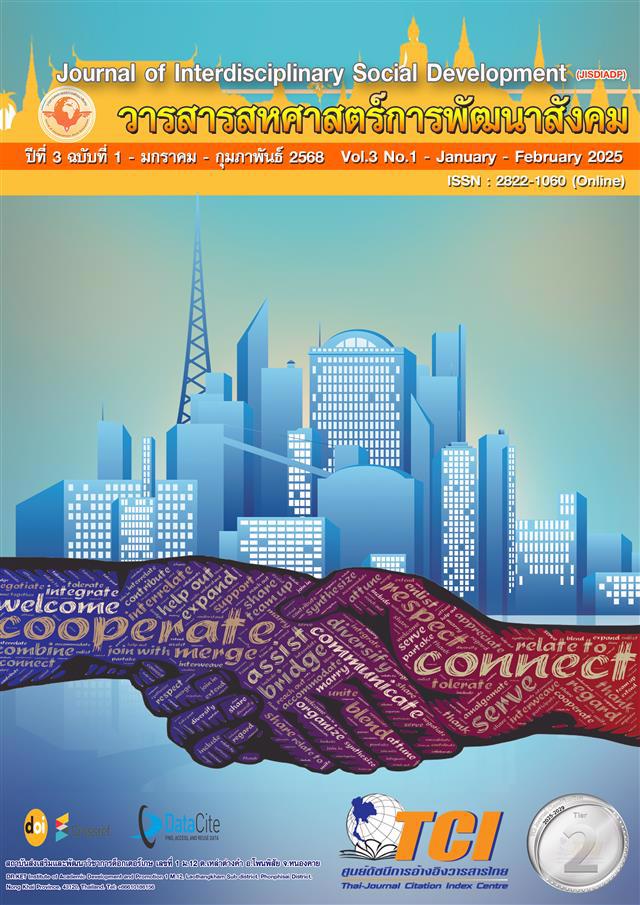
งานวิจัย 2:
พฤติกรรมการมีส่วนร่วมและความคิดเห็นในการจัดการศึกษาปฐมวัยของผู้ปกครอง ครอบครัว และชุมชน ผ่านกิจกรรมฐานการเรียนรู้ 5 พลัง
ผู้แต่ง:
-
อภินันท์ สิริรัตนจิตต์
-
ชัชวีร์ แก้วมณี
-
ฉัตรชยา รอดระหงส
-
อาภากร ราชสงฆ์
ระเบียบวิธีวิจัย: ผสมผสาน
วารสาร: วารสารสหศาสตร์การพัฒนาสังคม
ปี: 2568
ลิงค์เพื่อศึกษาเพิ่มเติม:
|
|
|
|
|
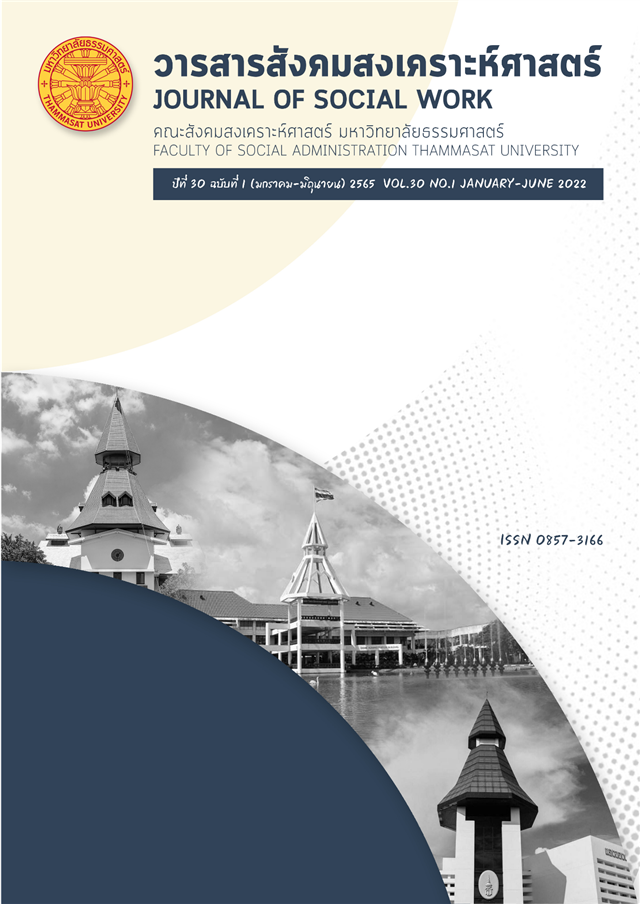
งานวิจัย 3:
เด็กอาศัยอยู่ในครอบครัวที่มีความรุนแรงในบ้าน
ผู้แต่ง
-
นัสรินทร์ แซสะ
-
ผู้ช่วยศาสตราจารย์ ดร.นฤทธิ์ ดวงสุวรรณ์
-
หริรักษ์ แก้วกับทอง
-
วัลภา ฐาน์กาญจน์ศูนย์
-
ฮามีดะห์ เจ๊ะแต
ระเบียบวิธีวิจัย: การวิจัยแบบมีส่วนร่วม
วารสาร: สังคมสงเคราะห์ศาสตร์และการบริหารสังคม
ปี: 2565
ลิงค์เพื่อศึกษาเพิ่มเติม:
https://so04.tci-thaijo.org/index.php/swjournal/issue/view/17317
|
|
|
|
|
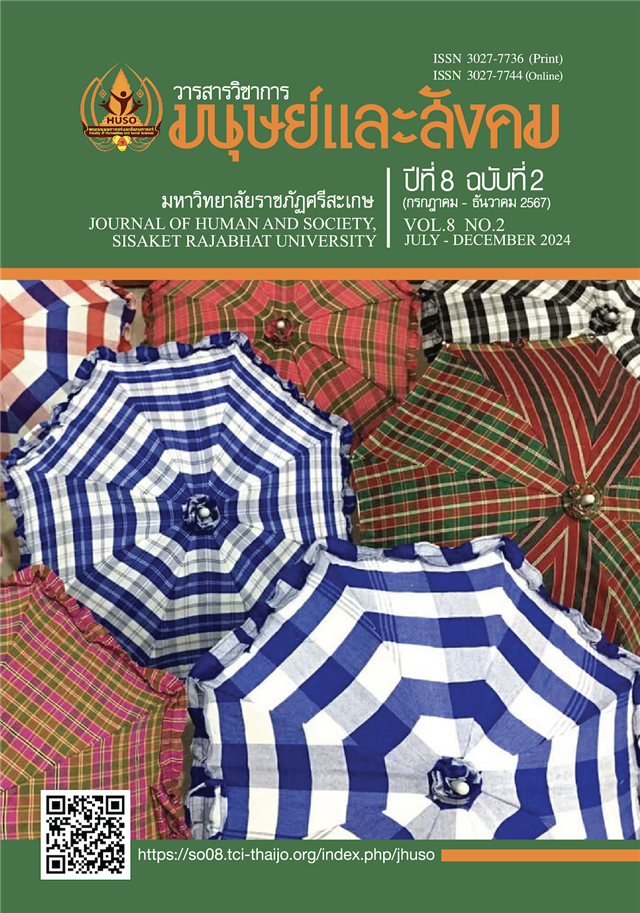
งานวิจัย 4:
การลงโทษที่เหมาะสมกับบุตร: การวิเคราะห์เชิงลึกในมุมมองทางกฎหมายและจริยธรรม
ผู้แต่ง
-
จันทราทิพย์ สุขุม
-
นงลักษณ์ อานี
ระเบียบวิธีวิจัย: เชิงคุณภาพ
วารสาร: มนุษย์และสังคม
ปี: 2567
ลิงค์เพื่อศึกษาเพิ่มเติม:
https://so08.tci-thaijo.org/index.php/jhuso/article/view/4098
|
|
|
|
|
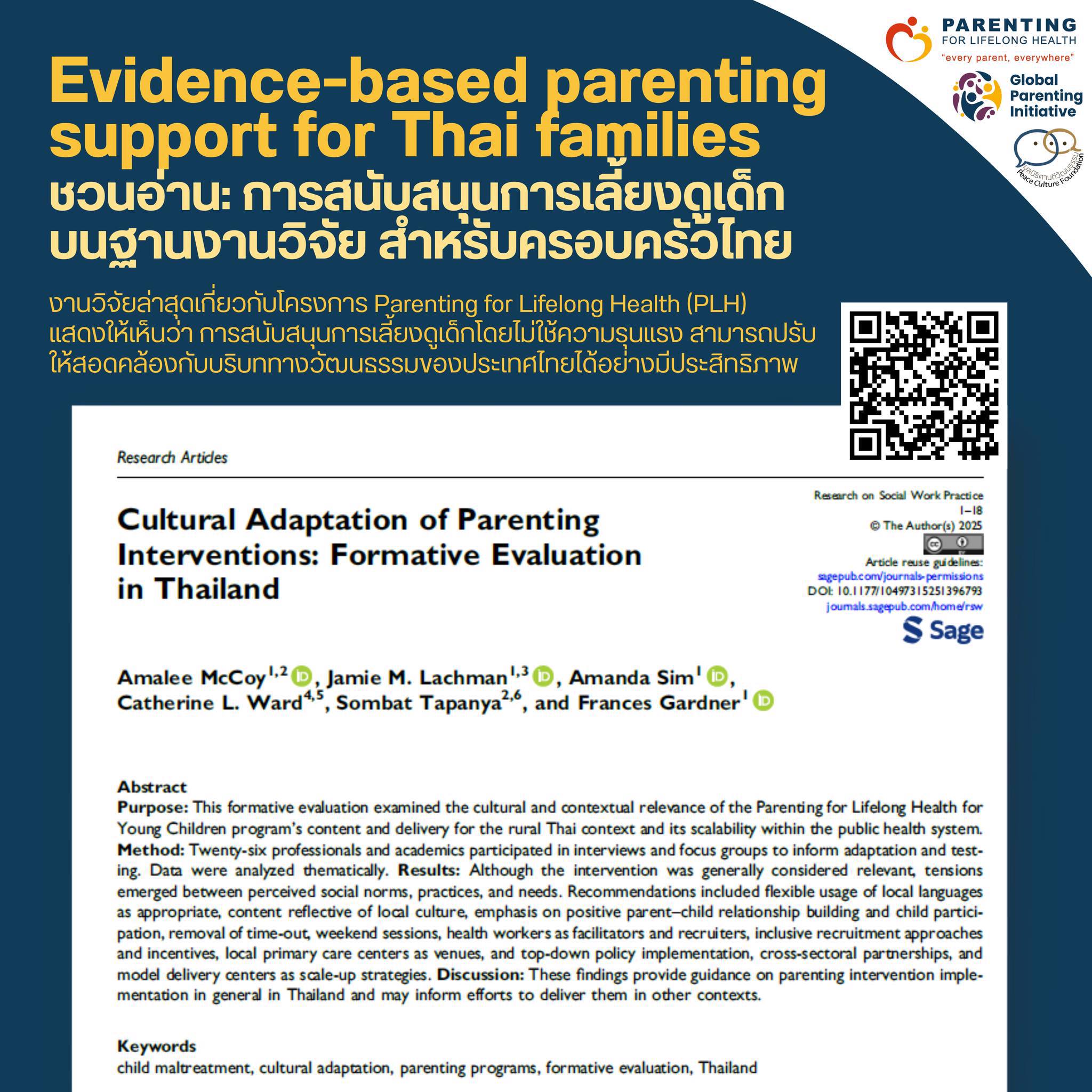
งานวิจัย 5:
Cultural Adaptation of Parenting Interventions: Formative Evaluation in Thailand
ผู้แต่ง; Amalee McCoy; Jamie M. Lachman; Amanda Sim;
Catherine L. Ward; Sombat Tapanya; Frances Gardner
ระเบียบวิธีวิจัย; การวิจัยเชิงคุณภาพ
วารสาร; Research on Social Work Practice
ปี; 2568
ลิงค์เพื่อศึกษาเพิ่มเติม:
DOI: 10.1177/10497315251396793 Mahidol Repository+1 |
|
|
|
|
งานวิจัย 1:
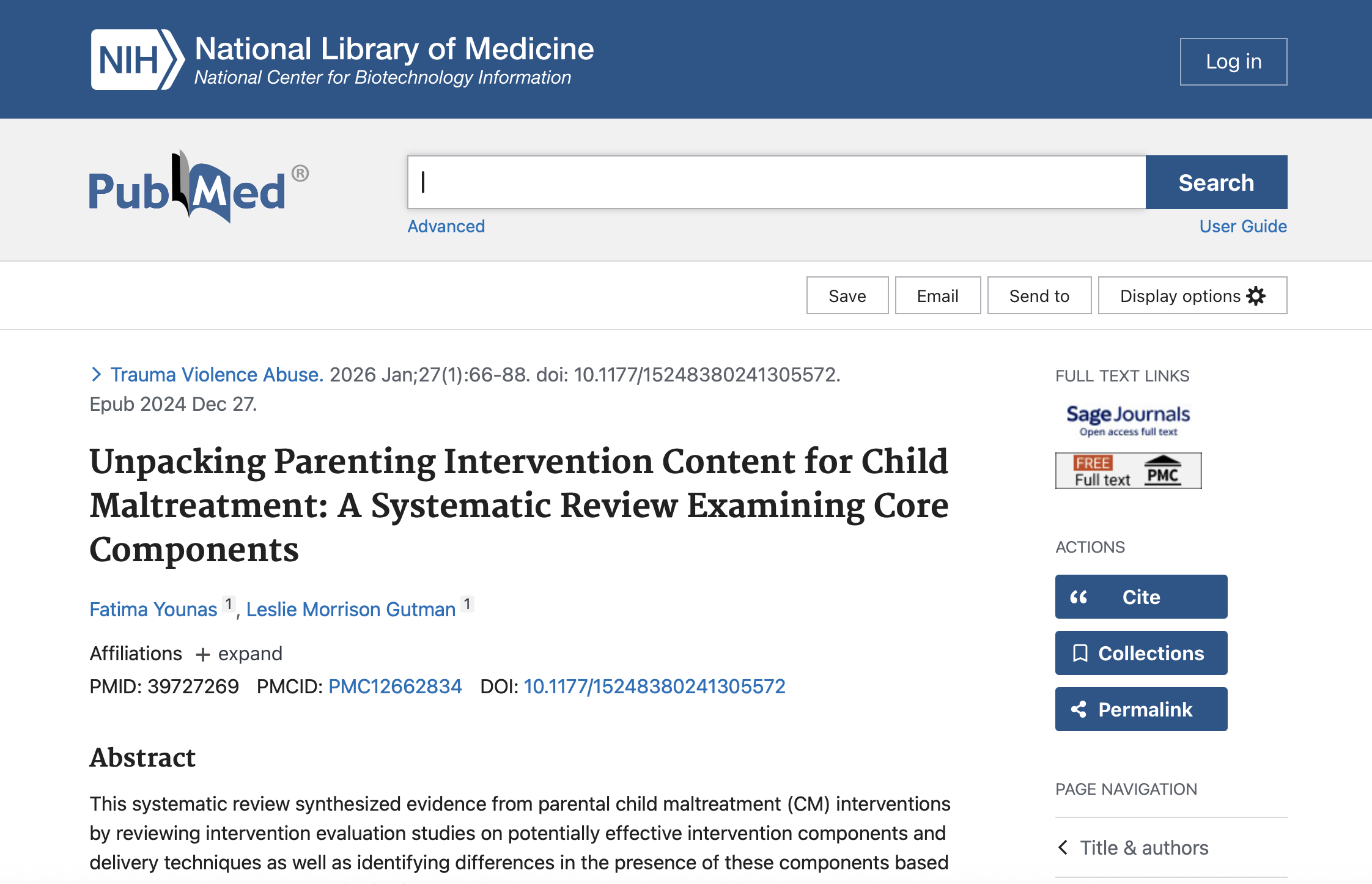
Unpacking Parenting Intervention Content for Child Maltreatment: A Systematic Review Examining Core Components
ผู้แต่ง:
Fatima Younas; Leslie Morrison Gutman
วิธีวิจัย: การทบทวนอย่างเป็นระบบ (systematic review)
วารสาร:
Trauma, Violence, & Abuse
ปี: 2024
ลิงค์เพื่อศึกษาเพิ่มเติม:
DOI: 10.1177/15248380241305572 PubMed |
|
|
|
|
งานวิจัย 2 :
Parenting programs for adolescent parents: a mixed methods systematic review of global interventions and evidence gaps
ผู้แต่ง:
Authors: K. (Katherine) Morse; M. Martin; R. Kruyer; C. Tatham
วิธีวิจัย: การทบทวนอย่างเป็นระบบ (systematic review)
วารสาร:
Vulnerable Children and Youth Studies
ปี: 2025
ลิงค์เพื่อศึกษาเพิ่มเติม:
https://www.tandfonline.com/doi/full/10.1080/17450128.2025.2587205 |
|
|
|
|
1. เอกสาร World Bank: Parenting Programs to Promote the Nurturing Care of Children: Essential Considerations (ปี 2025)
เอกสารฉบับนี้เป็น “แนวทางเชิงปฏิบัติ” สำหรับผู้กำหนดนโยบายและผู้ปฏิบัติงานในการ ออกแบบ–ดำเนินการ–ติดตามประเมินผล โปรแกรมการเลี้ยงดูเด็ก (parenting programs) ให้มีคุณภาพ ขยายผลได้ และคุ้มค่าต่อการลงทุน โดยเน้นประเทศรายได้ต่ำและปานกลาง
ประเด็นสำคัญที่ชี้ให้เห็น
-
การเลี้ยงดูที่เอื้อต่อพัฒนาการ (nurturing care: สุขภาพ โภชนาการ ความปลอดภัย การเรียนรู้ และการตอบสนองอย่างอ่อนไหว) เป็นรากฐานของพัฒนาการเด็ก และยังมีเด็กจำนวนมากที่ยังไม่ได้รับการดูแลขั้นต่ำที่เพียงพอ
-
ความสำเร็จของโปรแกรมไม่ได้ขึ้นกับ “เนื้อหา” อย่างเดียว แต่ขึ้นกับ “คุณภาพการนำไปใช้จริง” เช่น การประเมินบริบท การมีทฤษฎีการเปลี่ยนแปลง (ToC) ที่ชัดเจน การบูรณาการกับระบบบริการเดิม (สุขภาพ/การศึกษา/คุ้มครองทางสังคม) การคัดเลือก–ฝึกอบรม–กำกับติดตามวิทยากร/ผู้จัดกระบวนการ และการกำหนดความเข้มข้นของกิจกรรม (dosage) ที่เหมาะสม
-
เอกสารให้ความสำคัญกับ “ต้นทุนและความคุ้มค่า” โดยเสนอวิธีเก็บและวิเคราะห์ข้อมูลต้นทุน พร้อมกรณีศึกษาหลายประเทศ (เช่น Uganda, Nigeria, Panama, Philippines, Gambia, Peru) เพื่อช่วยวางแผนการขยายผลและการตัดสินใจเชิงงบประมาณ
ชวนคิดสำหรับงานในไทย: ใช้เป็นคู่มืออ้างอิงในการออกแบบ/ปรับโปรแกรมให้รักษาคุณภาพเมื่อขยายผล และช่วย “คุยกับผู้สนับสนุนงบประมาณ” ด้วยข้อมูลต้นทุน–ความคุ้มค่าอย่างเป็นระบบ
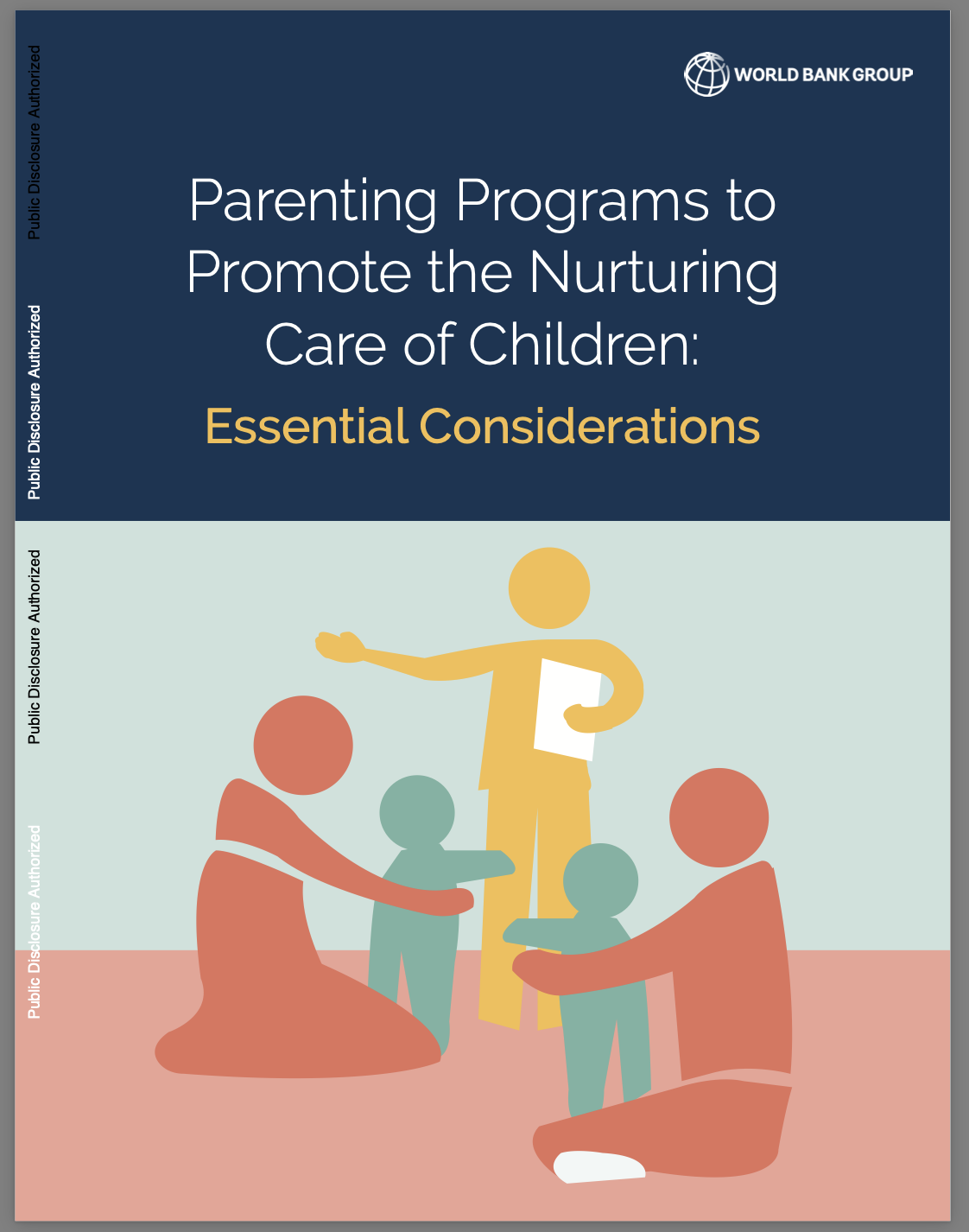
ศึกษาข้อมูลเพิ่มเติมได้ที่นี้
https://documents.worldbank.org/en/publication/documents-reports/documentdetail/099062025201016658
|
|
|---|
|
2. องค์การอนามัยโลก (WHO) เผยแพร่รายงานวิชาการ “Corporal Punishment of Children: The Public Health Impact”(เผยแพร่ 11 สิงหาคม 2025)
ชี้ให้เห็นว่าการลงโทษเด็กด้วยความรุนแรงทางกายยังเกิดขึ้นอย่างกว้างขวางทั่วโลก โดยประเมินว่ามีเด็กประมาณ 1.2 พันล้านคน (อายุ 0–18 ปี) ถูกลงโทษทางกายในบ้านในแต่ละปี และยังพบในโรงเรียนในสัดส่วนสูงในหลายประเทศ
รายงานย้ำว่า “การทำโทษทางกาย” ส่งผลเสียระยะยาวต่อสุขภาพ การเรียนรู้ และความเป็นอยู่ที่ดีของเด็ก และ ไม่มีหลักฐานว่ามีประโยชน์ WHO จึงเรียกร้องให้เร่งดำเนินการ ยุติ/ห้ามการลงโทษทางกายในทุกสถานที่ควบคู่กับการสนับสนุนพ่อแม่ ผู้ดูแล และครู ให้เข้าถึงแนวทาง วินัยเชิงบวกที่ไม่ใช้ความรุนแรง เพื่อสร้างสภาพแวดล้อมที่ปลอดภัยและเกื้อหนุนการเติบโตของเด็กมากขึ้น.
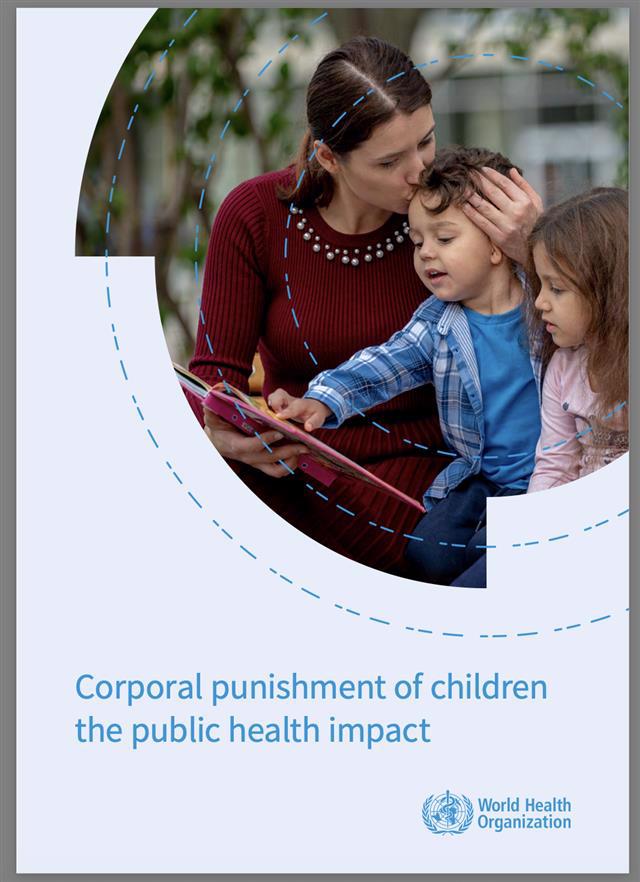
ศึกษาข้อมูลเพิ่มเติมได้ที่นี้
https://iris.who.int/server/api/core/bitstreams/01d2e03b-f891-44f2-9272-144508effaef/content
|
|
|---|
|
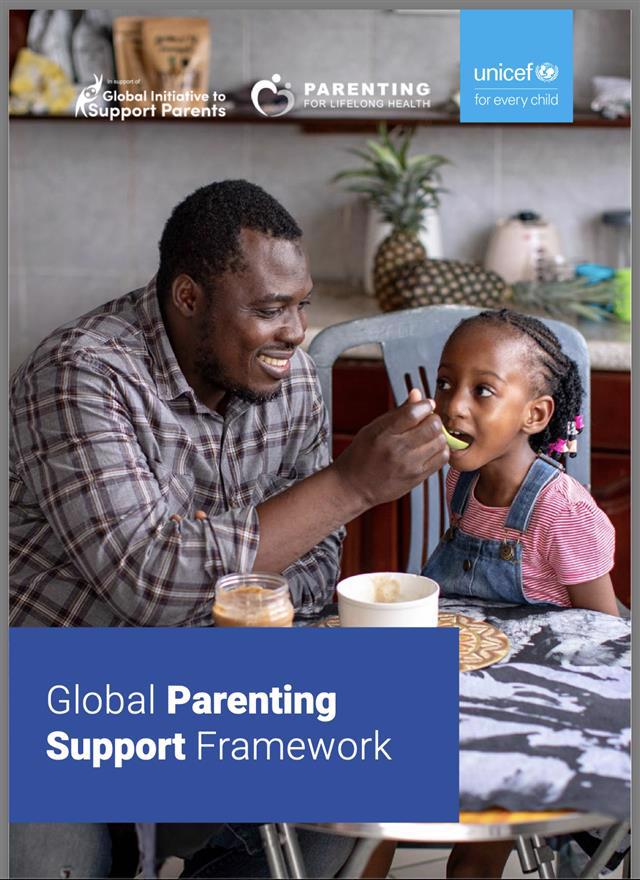
3. UNICEF ร่วมกับ Parenting for Lifelong Health (PLH) และได้รับการสนับสนุนจากภาคี Global Initiative to Support Parents (GISP) ได้แก่ WHO, ECDAN และ IRC ได้พัฒนา Global Parenting Support Framework หรือ “กรอบแนวคิดระดับโลกสำหรับการสนับสนุนการเลี้ยงดูแบบถ้วนหน้า”
เพื่อกำหนดวิสัยทัศน์ร่วมในการยกระดับ นโยบาย ระบบ และบริการสนับสนุนพ่อแม่/ผู้ดูแล ทั่วโลกด้วยมุมมองแบบ ตลอดช่วงชีวิต (life-course) และ พหุภาคส่วน (multisectoral).
กรอบฯ นี้ยึดหลักสิทธิเด็กและฐานหลักฐานเชิงประจักษ์ พร้อมเสนอแนวทางเชิงระบบในการ
“จัดระเบียบ” การสนับสนุนการเลี้ยงดูให้เชื่อมโยงกัน ตั้งแต่ นโยบาย การเงิน การพัฒนากำลังคน ไปจนถึงการจัดบริการ โดยมองว่าการสนับสนุนพ่อแม่เกิดขึ้นผ่านหลายระบบ เช่น สุขภาพ
การศึกษา การคุ้มครองทางสังคม การคุ้มครองเด็ก และบริการชุมชน และชี้แนวทางให้ประเทศต่าง ๆ ขยับจากโครงการที่กระจัดกระจายไปสู่ “ระบบชาติ” ที่บูรณาการ การสนับสนุนแบบถ้วนหน้า–แบบมุ่งเป้า–แบบเข้มข้น ตามความต้องการของครอบครัว.
ทั้งนี้ กรอบระดับโลกดังกล่าวต่อยอดจาก UNICEF ECARO Parenting Support Framework for the Early Years (ช่วงตั้งครรภ์–เด็กอายุ 8 ปี) และขยายให้ครอบคลุมตลอดช่วงชีวิตและบริบทระดับโลก เพื่อให้สามารถปรับใช้ได้หลากหลาย รวมถึงในสถานการณ์วิกฤต/มนุษยธรรม.
ศึกษาข้อมูลเพิ่มเติมได้ที่นี้
https://www.unicef.org/media/176766/file/revised%20global%20framework.pdf.pdf
|
|
|---|
|
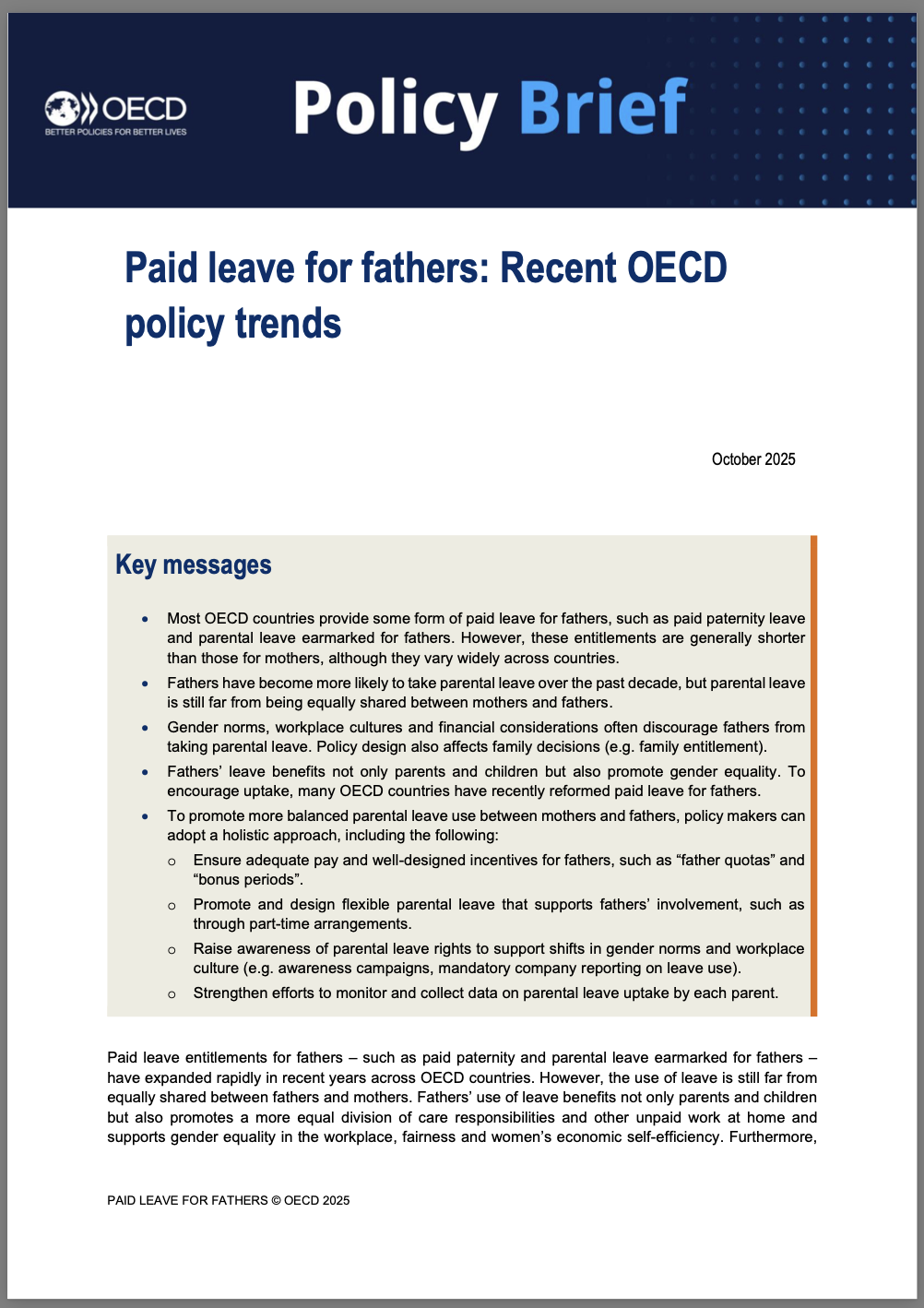
4. รายงานสรุปเชิงนโยบายฉบับใหม่ของ OECD
เรื่อง “Paid leave for fathers” ชี้ว่า แม้โดยรวม “พ่อ” ยังใช้สิทธิการลางานเพื่อดูแลบุตรน้อยกว่า “แม่” มาก แต่หลายประเทศกำลังเร่ง ขยายสิทธิการลาแบบมีค่าจ้างสำหรับพ่อ ทั้ง “ลาพ่อ (paternity leave)” และ “ลาเลี้ยงดูบุตรที่กันสิทธิไว้เฉพาะพ่อ (father-earmarked parental leave)” เพื่อเปลี่ยนพฤติกรรมการใช้สิทธิและลดความเหลื่อมล้ำทางเพศในงานดูแล
OECD ระบุว่า ณ เดือนเมษายน 2024 ประเทศสมาชิก OECD 35 จาก 38 ประเทศ มีสิทธิการลาแบบมีค่าจ้างสำหรับพ่อในรูปแบบใดรูปแบบหนึ่ง โดย “ลาพ่อ” มักมีระยะสั้น (เฉลี่ย 2.4 สัปดาห์) ขณะที่บางประเทศขยายสิทธิอย่างมาก เช่น สเปน 16 สัปดาห์ รายงานยังสรุปหลักฐานว่า เมื่อพ่อได้ลาและใช้สิทธิจริง จะช่วย สนับสนุนการจ้างงานของแม่ เพิ่มการมีส่วนร่วมของพ่อในการดูแลเด็กและงานบ้าน และส่งผลเชิงบวกต่อความเป็นอยู่ที่ดีของครอบครัว
ข้อเสนอเชิงนโยบายสำคัญ ได้แก่ การออกแบบสิทธิที่ กันไว้เฉพาะพ่อและไม่โอนได้ (non-transferable/“daddy quota”)ทำให้ ค่าชดเชยเพียงพอ ลดอุปสรรคด้านรายได้และวัฒนธรรมองค์กร และสร้างเงื่อนไขการลาให้ “เข้าถึงได้จริง” เพื่อเพิ่มการใช้สิทธิของพ่อและยกระดับความเท่าเทียมในการดูแล
ศึกษาข้อมูลเพิ่มเติมได้ที่นี้
https://www.unicef.org/media/176766/file/revised%20global%20framework.pdf.pdf
|
|
|---|
|
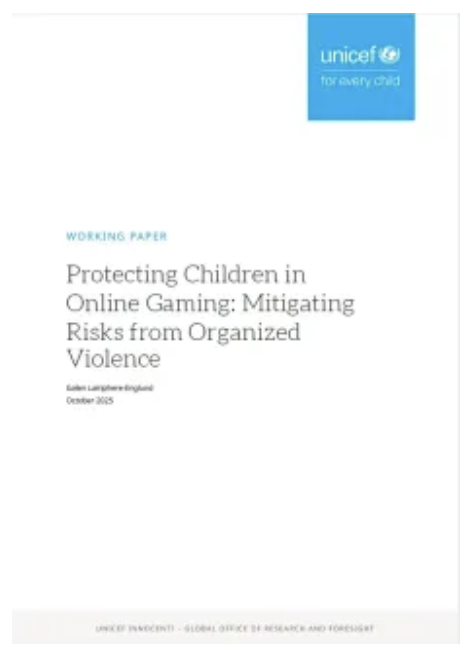
5. UNICEF Innocenti เผยแพร่เอกสาร Working Paper เรื่อง “Protecting Children in Online Gaming: Mitigating Risks from Organized Violence” (ต.ค. 2025)
โดย Galen Lamphere-Englund ชี้ว่า “เกมออนไลน์” กลายเป็นพื้นที่สังคมสำคัญของเด็กจำนวนมาก แต่ขณะเดียวกัน กลุ่มใช้ความรุนแรง/เครือข่ายอาชญากรรม เริ่มฉวยใช้ระบบนิเวศของเกม (แชตหลายผู้เล่น ชุมชนออนไลน์ การสวมบทบาท/อัตลักษณ์) เพื่อ โฆษณาชวนเชื่อ ล่อลวง (grooming) ชักจูง และรับสมัคร เด็กเข้าสู่ความรุนแรงแบบจัดตั้ง โดยเอกสารย้ำว่า เกมไม่ใช่สาเหตุโดยตรงของความรุนแรง แต่โครงสร้างทางสังคมและเทคนิคของแพลตฟอร์มกำลังถูก “นำไปใช้ผิดวัตถุประสงค์” ในวงกว้างจึงต้องมีมาตรการป้องกัน–ตรวจจับ–ตอบสนองที่จริงจังเพื่อคุ้มครองสิทธิเด็กในการเล่นและความปลอดภัย.
เอกสารเสนอข้อแนะนำเชิงปฏิบัติให้หลายภาคส่วนร่วมกันดำเนินการ เช่น การทำวิจัยอุดช่องว่างข้อมูลและยกระดับนโยบายสิทธิเด็กในโลกดิจิทัล (อ้างอิง General Comment No.25), การบูรณาการประเด็น “ความรุนแรงออนไลน์ผ่านเกม” เข้ากับระบบคุ้มครองเด็กของชาติและกฎหมายความปลอดภัยออนไลน์, การลงทุนด้านการรู้เท่าทันสื่อ/เกมและระบบส่งต่อช่วยเหลือ, และสำหรับบริษัทเกมให้ใช้แนวคิด safety-by-design, เสริม การยืนยันอายุ/การควบคุมโดยผู้ปกครอง, ระบบรายงานที่เป็นมิตรต่อเด็ก, การตรวจจับการใช้แพลตฟอร์มในทางจัดตั้ง และความโปร่งใสผ่านรายงานด้านความปลอดภัยเด็ก.
ศึกษาข้อมูลเพิ่มเติมได้ที่นี้
https://www.unicef.org/media/176766/file/revised%20global%20framework.pdf.pdf
|
|
|---|
|
งานสัมมนาของชุมชนผู้ปฏิบัติงาน
ด้านการเลี้ยงดูเด็กเชิงบวกในประเทศไทย (TPP CoP) ที่ผ่านมา
|
|
|
|
|
การการสัมมนาออนไลน์ ครั้งที่ 18
Thai Positive Parenting Community of Practice (TPP CoP)
วันที่ 14 ตุลาคม 2568 เวลา 14.00-15.30 น.
Webinar #18 ของ Thai Positive Parenting Community of Practice (TPP CoP) จัดร่วมกับมูลนิธิ Pranaiya & Arthur Magoffin Foundation (PAM)
ในหัวข้อ “The Power of Self-Care” เพื่อทำความเข้าใจความเชื่อมโยงระหว่างสุขภาพจิตของแม่กับการดูแลทารกแรกเกิด โดยเน้นว่าการดูแลใจของแม่คือฐานสำคัญของการเลี้ยงดูที่ปลอดภัยและอ่อนโยนตั้งแต่ช่วงเริ่มต้นชีวิต เวทีนี้ได้รับมุมมองจากทั้งภาคประชาสังคมและนานาชาติด้าน SRHR ผ่านคุณ Hamish Magoffin และคุณ Shanon McNab (UNFPA APRO) ร่วมกับความรู้เชิงคลินิกจาก พ.ญ.ถิรพร ตั้งจิตติพร จิตแพทย์เด็กและวัยรุ่น เพื่อเชื่อมหลักฐานและประสบการณ์การทำงานจริงเข้าด้วยกัน
ผู้เข้าร่วมจะได้แนวทางเชิงปฏิบัติในการส่งเสริม self-care และระบบสนับสนุนรอบตัวแม่ตลอดจนข้อคิดสำหรับการทำงานเชิงบริการ/นโยบายเพื่อคุ้มครองสุขภาพจิตมารดาและพัฒนาคุณภาพการดูแลทารกในบริบทไทย
สามารถรับชมวิดิโอย้อนหลังได้ที่ลิงค์; https://youtu.be/Qh3rcfZ0a3k?si=qYenhGgOg0GvQBIp
|
|
|
|
|
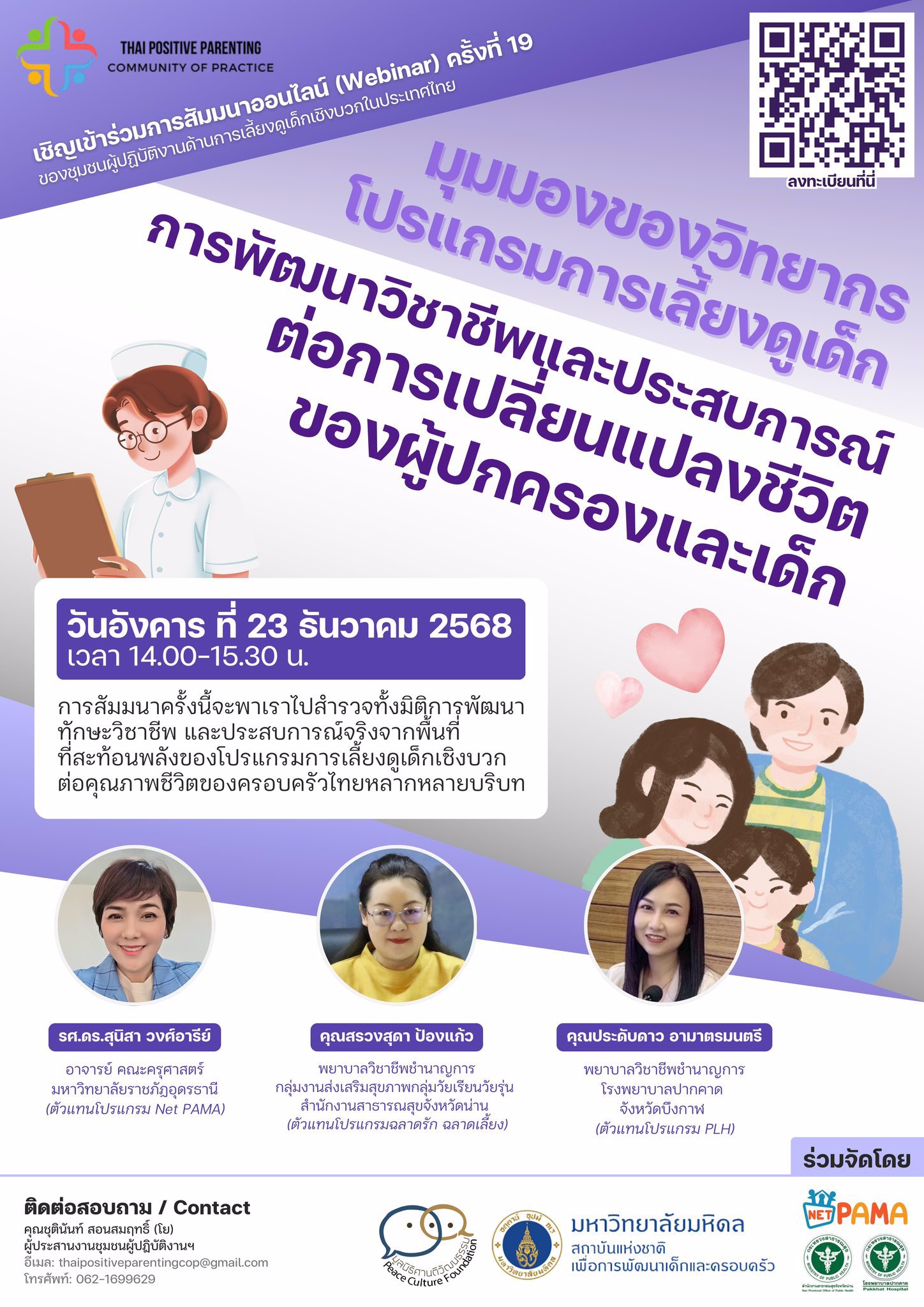 |
การสัมมนาออนไลน์ (Webinar) ครั้งที่ 19 ของชุมชนผู้ปฏิบัติงานด้านการเลี้ยงดูเด็กเชิงบวกในประเทศไทย (Thai Positive Parenting Community of Practice)
ร่วมจัดโดย Net PAMA สำนักงานสาธารณสุข จ.น่าน และ โรงพยาบาลปากคาด จ.บึงกาฬ
วันที่ 23 ธันวาคม 2568 เวลา14.00–15.30 น.
หัวข้อ "มุมมองของวิทยากรโปรแกรมการเลี้ยงดูเด็ก: การพัฒนาวิชาชีพและประสบการณ์ต่อการเปลี่ยนแปลงชีวิตของผู้ปกครองและเด็ก" การสัมมนาครั้งนี้จะพาเราไปสำรวจทั้งมิติการพัฒนาทักษะวิชาชีพ และประสบการณ์จริงจากพื้นที่ ที่สะท้อนพลังของโปรแกรมการเลี้ยงดูเด็กเชิงบวก ต่อคุณภาพชีวิตของครอบครัวไทยในหลากหลายบริบท
วิทยากรรับเชิญ
1. รศ.ดร.สุนิสา วงศ์อารีย์ อาจารย์ คณะครุศาสตร์ มหาวิทยาลัยราชภัฏอุดรธานี (ตัวแทนโปรแกรม Net PAMA)
2. คุณสรวงสุดา ป้องแก้ว พยาบาลวิชาชีพชำนาญการ กลุ่มงานส่งเสริมสุขภาพกลุ่มวัยเรียนวัยรุ่น สำนักงานสาธารณสุขจังหวัดน่าน (ตัวแทนโปรแกรมฉลาดรัก ฉลาดเลี้ยง)
3. คุณประดับดาว อามาตรมนตรี พยาบาลวิชาชีพชำนาญการ โรงพยาบาลปากคาด จังหวัดบึงกาฬ (ตัวแทนโปรแกรม PLH)
สามารถรับชมวิดิโอย้อนหลังได้ที่ลิงค์; https://youtu.be/b4Vs6Hlh6-8?si=QU6ycXo3DPbf3ZyS
|
|
|
|
|
1. ECDAN เปิดตัวระยะที่ 2 ของแคมเปญ Childcare4All
เพื่อยกระดับ “ระบบการดูแลเด็ก” (childcare systems) ทั่วโลก ผ่านความร่วมมือหลักฐานเชิงประจักษ์ และการสื่อสารเชิงนโยบาย โดยระยะนี้มี 3 องค์ประกอบสำคัญ ได้แก่
(1) Systems Thinking for ECD Collaborative เครือข่ายองค์กรชั้นนำจากเอเชียและแอฟริกาที่ร่วมกันประยุกต์ “การคิดเชิงระบบ” เพื่อพัฒนา ECD
(2) Childcare Systems Map เครื่องมือสาธารณะระดับโลกที่ช่วยทำความเข้าใจองค์ประกอบของระบบการดูแลเด็กทั้งระบบ เพื่อหนุนการออกแบบนโยบายและการสื่อสารเชิงรณรงค์อย่างรอบด้าน และ
(3) CARE Initiative (Childcare Advocacy, Research, and Engagement) ที่สนับสนุนพันธมิตรแบบพหุภาคีใน บังกลาเทศ แอฟริกาใต้ และแทนซาเนีย เพื่อขับเคลื่อนแคมเปญระดับประเทศอย่างเป็นรูปธรรม.
เพื่อสนับสนุนการใช้ Childcare Systems Map ให้เกิดผลจริง ECDAN ยังจัด หลักสูตรออนไลน์เชิงปฏิบัติการ 4 เดือน สำหรับกลุ่มพันธมิตรระดับประเทศและหน่วยงานรัฐ เพื่อเรียนรู้การปรับใช้แผนที่ให้เหมาะกับบริบทท้องถิ่น และพัฒนาการทำงานเชิงประสาน/การรณรงค์ที่ใช้หลักฐานร่วมกัน เพื่อมุ่งสู่บริการดูแลเด็กที่ เข้าถึงได้ มีคุณภาพ และราคาเอื้อมถึง.
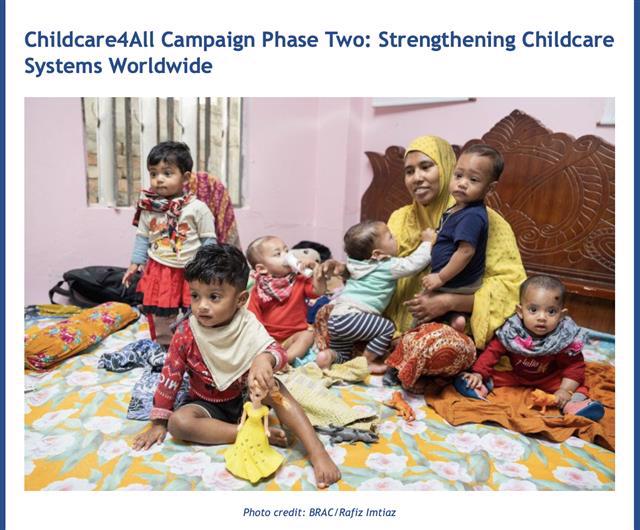
ศึกษาข้อมูลเพิ่มเติมได้ที่นี้
https://ecdan.org/press/opportunity-to-join-ecdans-childcare-systems-map-course/
|
|
|---|
|
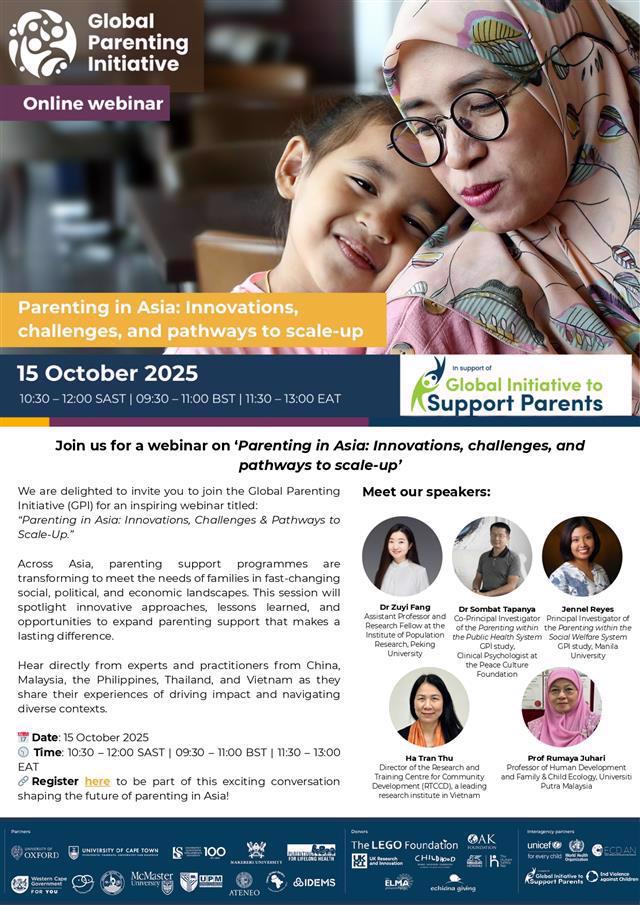
2. การสัมมนาออนไลน์: Parenting in Asia: Innovations, Challenges, and Pathways to Scale-Up (GPI)
ทั่วภูมิภาคเอเชีย โปรแกรมสนับสนุนการเลี้ยงดูเด็กกำลังปรับตัวเพื่อตอบสนองความต้องการของครอบครัว ภายใต้บริบททางสังคม การเมือง และเศรษฐกิจที่เปลี่ยนแปลงอย่างรวดเร็ว
Global Parenting Initiative (GPI) ได้จัดสัมมนาออนไลน์เพื่อแลกเปลี่ยนประสบการณ์จากจีน มาเลเซีย ฟิลิปปินส์ ไทย และเวียดนาม โดยนักวิชาการและผู้ทำงานเชิงนโยบาย/การขับเคลื่อนร่วมกันถอดบทเรียนแนวทางนวัตกรรมที่สร้างผลลัพธ์จริง
ความท้าทายในบริบทที่หลากหลาย และโอกาสในการขยายผล (scale-up) การสนับสนุนการเลี้ยงดูเด็กที่อิงหลักฐานเชิงประจักษ์ในระดับภูมิภาค
การเสวนาดำเนินรายการโดย Dr Amalee McCoy และมี ดร.สมบัติ ตาปัญญา (มูลนิธิศานติวัฒนธรรม) ร่วมเป็นวิทยากรในฐานะผู้แทนประเทศไทย สัมมนาจัดเมื่อวันที่ 15 ตุลาคม 2025
รับชมย้อนหลัง: https://youtu.be/CqI_yQqj67o?si=DzZrjXe9JdX2zCr9
 |
|
|---|
|
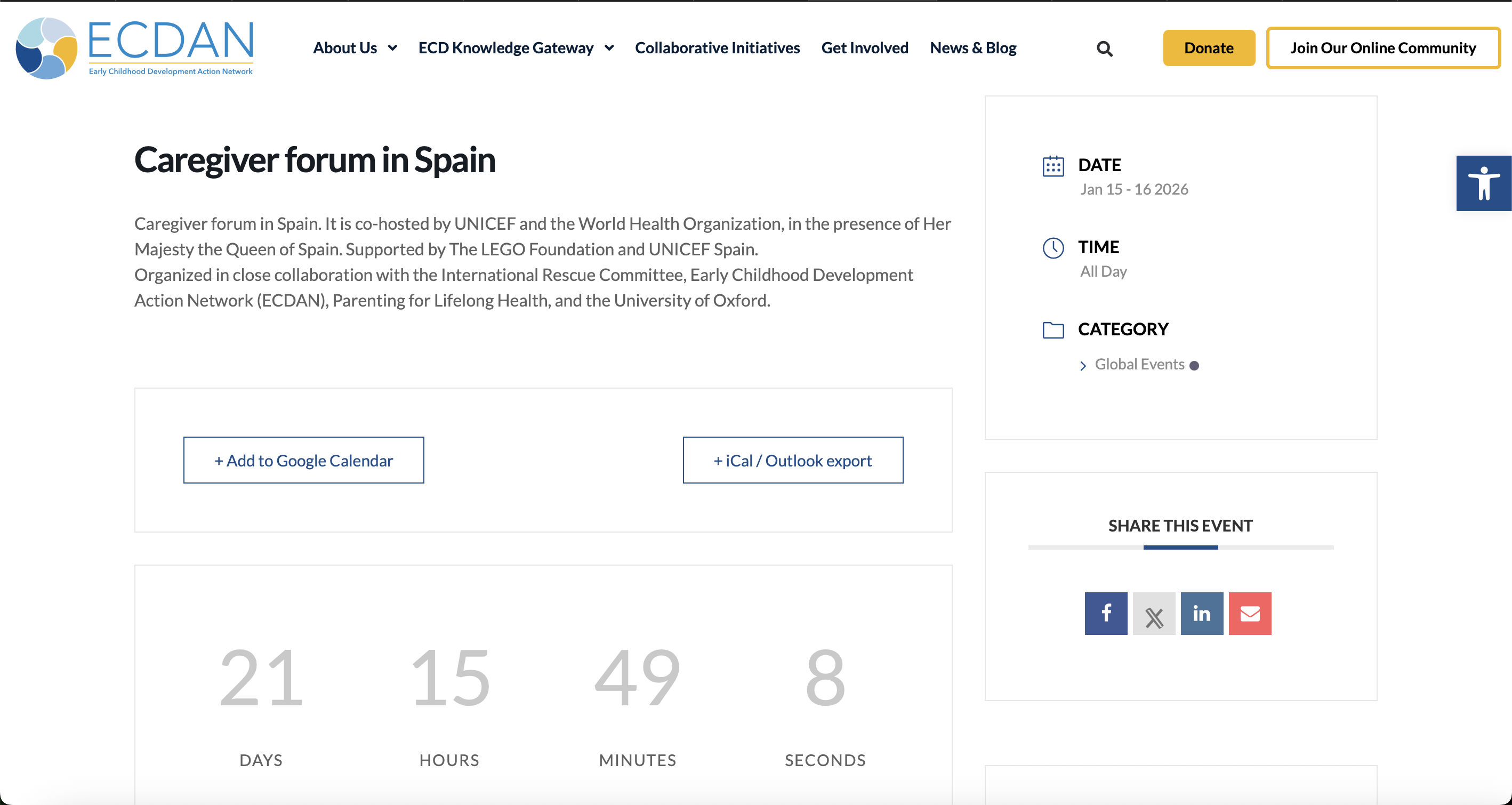
3. Global Caregiver Forum, Madrid, 15-16 January 2026 in Spain
จะจัดขึ้นวันที่ 15–16 มกราคม 2569 (2026) โดยเป็นเวทีระดับโลก ด้าน “การสนับสนุนผู้ดูแลเด็ก/พ่อแม่ผู้ปกครอง” ซึ่ง UNICEF และ องค์การอนามัยโลก (WHO) เป็นเจ้าภาพร่วม และจัดขึ้น โดยมีสมเด็จพระราชินีแห่งสเปนเสด็จฯ เป็นองค์ประธาน/อยู่ในพิธี
ทั้งนี้ได้รับการสนับสนุนจาก The LEGO Foundation และ UNICEF Spain และดำเนินการร่วมกับภาคีสำคัญ ได้แก่ International Rescue Committee (IRC), ECDAN, Parenting for Lifelong Health (PLH) และ University of Oxford.
 สามารถศึกษาข้อมูลเพิ่มเติมได้ที่ ; https://ecdan.org/events/caregiver-forum-in-spain/
|
|
|---|
|
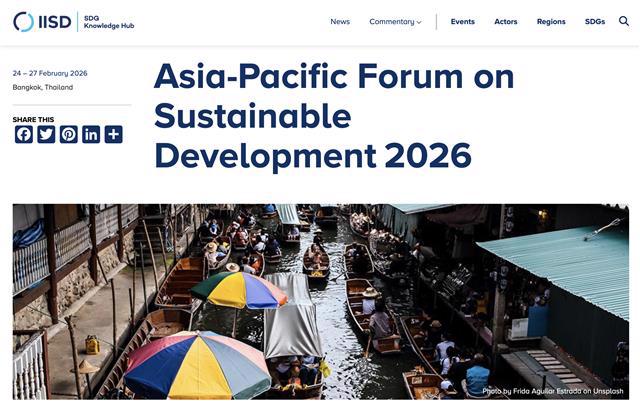
4. Asia-Pacific Forum on Sustainable Development 2026 (APFSD 13)
จะจัดขึ้นวันที่ 24–27 กุมภาพันธ์ 2569 ณ ศูนย์ประชุมสหประชาชาติ (UNCC) กรุงเทพมหานคร เป็นเวทีระหว่างรัฐบาลระดับภูมิภาคเอเชีย-แปซิฟิกที่เปิดกว้างและครอบคลุม
เพื่อทบทวนความก้าวหน้าการขับเคลื่อน วาระการพัฒนาที่ยั่งยืน ค.ศ.2030 (SDGs) และแลกเปลี่ยนแนวปฏิบัติที่ดี โดยข้อสรุปจะเชื่อมโยงไปสู่การหารือในเวที High-level Political Forum (HLPF) 2026 ที่นิวยอร์ก.
เวทีปี 2569 จัดภายใต้หัวข้อ “Transformative, equitable, innovative and coordinated actions for the 2030 Agenda and its SDGs for a sustainable future for all” และจะทบทวนเชิงลึก SDGs ที่อยู่ในวาระ ได้แก่ SDG 6 (น้ำสะอาดและสุขาภิบาล), SDG 7 (พลังงานสะอาด), SDG 9 (อุตสาหกรรม/นวัตกรรม/โครงสร้างพื้นฐาน), SDG 11 (เมืองยั่งยืน) และ SDG 17 (หุ้นส่วนความร่วมมือ) รวมถึงมีเวทีสนับสนุนประเทศที่นำเสนอ Voluntary National Reviews (VNRs) ใน HLPF 2026.
หมายเหตุ: การเข้าร่วม Plenary และ SDG Roundtables มักเป็น แบบเชิญเท่านั้น ขณะที่กิจกรรมคู่ขนาน/Side events ที่เปิดให้เข้าร่วมจะจัดตลอดช่วงงาน และยังมี associated events วันที่ 23 กุมภาพันธ์ 2569.
 สามารถศึกษาข้อมูลเพิ่มเติมได้ที่ ; https://sdg.iisd.org/events/asia-pacific-forum-on-sustainable-development2026/
|
|
|---|
|
จดหมายข่าวฉบับนี้เป็นจดหมายข่าว ฉบับที่ 12 และเป็นฉบับที่สี่ ของปี 2568
เผยแพร่เดือน ธันวาคม 2568 และทั้งนี้จดหมายข่าวฉบับต่อไป จะเผยแพร่ต่อไปในเดือน มีนาคม 2569
หากท่านต้องการลงข้อมูลงานวิจัย กิจกรรมขององค์กร งานประชุมสัมมนา ฯลฯ ในจดหมายข่าวนี้
โปรดส่งข้อมูลมายังผู้ประสานงานโครงการ ฯ คุณชุตินันท์ สอนสมฤทธิ์
ที่อีเมล thaipositiveparentingcop@gmail.com
ขอขอบพระคุณทุกท่านสำหรบัการติดตามงานความเคลื่อนไหวกับคณะทำงานฯ
มูลนิธิศานติวัฒนธรรม |
|
|
-
World Bank document:
Parenting Programs to Promote the Nurturing Care of Children: Essential Considerations(2025).
-
The World Health Organization (WHO) published the academic report
Corporal Punishment of Children: The Public Health Impact (published on 11 August 2025), highlighting that physical punishment of children remains widespread globally.
-
UNICEF, together with Parenting for Lifelong Health (PLH) and with support from partners under the Global Initiative to Support Parents (GISP)—including WHO, ECDAN, and IRC—has developed the Global Parenting Support Framework, a global framework for universal parenting support.
-
Global Caregiver Forum, Madrid (15–16 January 2026): This global forum on caregiver/parenting support will be held on 15–16 January 2026.
|
|
|---|
|
|
|
Message from the Co-Chairs
|
|
|---|
|
Dear Members and Readers,
Welcome to Newsletter Issue #12 for the October–December 2026 quarter. Over the past quarter, our network has continued to move forward with a range of activities, including in-person events, online webinars, and the addition of new resources on the CoP website. These efforts have not only supported meaningful knowledge exchange, but have also demonstrated the collective strength of our collaboration, gradually contributing to a stronger system of support for positive parenting in Thailand.
We would like to sincerely thank all members who have helped complete and strengthen this network by joining activities, sharing field-based experiences, and passing on practical knowledge and tools. Your contributions are at the heart of CoP’s continued growth and have helped bring academic insights and on-the-ground practice closer together in a more meaningful way.
Looking ahead to the next quarter and into the coming year, we will continue to consistently deliver our core activities, including bi-monthly webinars, quarterly newsletters, and the dissemination of guidelines, research, and lessons learned so that members can apply them directly to their work. At the same time, we aim for the coming year to be another important step forward for the network by expanding learning spaces, strengthening and improving access to our resource hub, and encouraging more cross-area exchange, so that lessons from different provinces, sectors, and organizations can be shared and amplified in ways that truly support one another.
We warmly invite all members to share useful resources, tools, or activities with the network. You may contact Khun Chutinan (Yo), the CoP Coordinator, at chutinan.s@pcfthailand.org, to share suggestions, propose topics you would like the CoP to highlight, or submit resources you would like to disseminate through the network.
In addition, to make communication more accessible and continuous, we also have the CoP Facebook page at https://www.facebook.com/TPPCoP. This serves as another channel for public communication, ongoing updates, and wider discussion alongside the CoP website.
The Co-Chairs and support team strongly believe that, through everyone’s collaboration and voices, our network will continue to build a positive parenting space that is safe, strong, and sustainable. We would like to send our encouragement to all of you wishing you continued energy, inspiration, and success in every aspect of your life and work as we close out 2025 and welcome the new year.
Best wishes,
Dr. Sombat Tapanya
Dr. Amalee McCoy
Dr. Panadda Thanasethakorn
|
|
|---|
|
|
|
|---|
|
|
In each issue, we would like to introduce a few organizations working in the area of positive parenting in Thailand, which would provide networking and knowledge exchange opportunities. In this issue, we would like to introduce: |
|
|---|
|
1. Path2Health Foundation (P2H)
A public-benefit NGO registered in Thailand in 2013. It continues the legacy of PATH Thailand, which has been working in the country since 1985, with a commitment to “creating innovations” to improve the health and quality of life of people in Thailand through participatory approaches and multi-sector partnerships. P2H’s core mission and approaches include: developing knowledge and learning to strengthen well-being; building the capacity of agencies and organizations to deliver health-promotion activities; creating innovations to expand access to health information and services; designing health behavior-change processes that align with the culture and everyday lives of target groups; conducting policy work to advance equity in health and well-being; and supporting joint strategies with both the public and private sectors.
|
|
|
Examples of P2H’s work cover children, youth, families, and sexual and reproductive health and well-being, such as initiatives on mental well-being for children, youth, and families; anti-bullying prevention (Stop Bullying); sexuality education and family communication to prevent adolescent pregnancy; area-based projects implemented in collaboration with local administrative organizations to support youth well-being; and positive parenting promotion initiatives in workplace settings.
Please visit;https://path2health.or.th/
|
|
|---|
|
|
2. Alliance Anti Trafic (AAT)
Alliance Anti Trafic (AAT) is a non-profit organization working to protect and empower women and girls facing at risk of or experiencing sexual violence and exploitation—including sexual abuse, harassment, forced marriage, illegal/forced surrogacy, and trafficking for sexual purposes.
|
|
|

AAT works closely with communities, schools, and partner networks to strengthen prevention and protection, and to support safe pathways to assistance—contributing to efforts to end sexual violence against women and girls across Southeast Asia.
Please visit;
https://aatthai.org/th
|
|
|---|
|
|
The Department of Children and Youth (DCY), in collaboration with the Child Rights Protection Center Foundation and the Child Rights Network Thailand, convened a National Consultation to review and refine Thailand’s draft country report at the end of the implementation period (2016–2025) |
|
|---|
|
On 28 October 2025, the Department of Children and Youth (DCY), in collaboration with the Child Rights Protection Center Foundation and the Child Rights Network Thailand, convened a National Consultation to review and refine Thailand’s draft country report at the end of the implementation period (2016–2025) on:
-
the ASEAN Regional Plan of Action on the Elimination of Violence Against Children (RPA on EVAC), and
-
the ASEAN Regional Plan of Action on the Protection of Children from all Forms of Online Exploitation and Abuse (2020–2025).
The consultation brought together relevant government agencies and civil society organizations to jointly review the draft report, propose revisions, and identify additional evidence and information. Beyond presenting their own agencies’ contributions, participants also supported the process by helping gather and verify implementation information from agencies that were unable to attend—demonstrating strong coordination and shared ownership across sectors. In addition to strengthening the implementation reporting, the meeting also highlighted key opportunities to further elevate Thailand’s efforts to end violence against children during the next period.
The organizers would like to express their appreciation to Mr. Wanchai Rujanawong, former Thailand Representative on Children’s Rights to the ASEAN Commission on the Promotion and Protection of the Rights of Women and Children (ACWC), for chairing and guiding the consultation, as well as to the teams from DCY, the Child Rights Network Thailand, all participating agencies, and the Center for the Protection of Child Rights, for their continued collaboration and commitment.
|
|
Thailand’s Department of Mental Health, through the Northeastern Child and Adolescent Mental Health Institute, in collaboration with WHO Thailand,
organized the 3rd “Positive Parenting Fun Run (Run with Your Child)”
at Bueng Thung Sang Public Park, Khon Kaen Province.
|
|
|---|
|
On 2 November 2025, Thailand’s Department of Mental Health, through the Northeastern Child and Adolescent Mental Health Institute, in collaboration with WHO Thailand, organized the 3rd “Positive Parenting Fun Run (Run with Your Child)” at Bueng Thung Sang Public Park, Khon Kaen Province.
The event aimed to promote positive parenting and strengthen warm, supportive relationships between parents and children. The opening ceremony was presided over by Dr. Nichapa Sawasdikarnon, Deputy Director-General of the Department of Mental Health, with participation from WHO Thailand, local authorities, and partner agencies.
The programme combined a health run with family-bonding games and positive parenting learning activities. It also featured five activity stations—
Hug to Build Love, Praise to Build Joy, Communication from the Heart, Quality Time for Happiness, and
Positive Parenting Skills—designed to encourage positive communication, meaningful family time, and practical parenting skills in everyday life. Previous Fun Runs (Rounds 1–2) held in Chiang Mai attracted more than 800 participants and achieved an overall satisfaction rating of 84.7%, underscoring the value of expanding access to evidence-based positive parenting knowledge across all regions of Thailand. The event aligns with the joint initiative “Scaling Up Evidence-Based Parenting Interventions in Thailand” led by the Department of Mental Health and WHO Thailand to strengthen families and promote sustainable mental well-being.
|
|
|---|
|
The Department of Children and Youth (DCY), Ministry of Social Development and Human Security (MSDHS), together with partner networks, concluded the National Children and Youth Assembly Workshop 2025 at the Grand Howard Hotel, Bangkok.
|
|
|---|
|
On 23 December 2025, the Department of Children and Youth (DCY), Ministry of Social Development and Human Security (MSDHS), together with partner networks, concluded the National Children and Youth Assembly Workshop 2025 at the Grand Howard Hotel, Bangkok. The closing ceremony was chaired by Mr. Kitti Intharakul, Deputy Permanent Secretary of MSDHS, who received the presentation of a participatory 10-year strategic action plan and formally acknowledged six resolutions proposed by children and youth from across Thailand. The initiative aims to strengthen cross-agency coordination and drive these resolutions toward concrete implementation.
The event featured reflections from Ms. Apinya Chomphumas (Director-General, DCY), Ms. Severine Leonardi (Officer-in-Charge, UNICEF Thailand), and Mr. Chintanapat Tohsen (President, National Children and Youth Council of Thailand).
The workshop provided a platform for children and youth to exchange perspectives, highlight key issues, and propose province-level actions grounded in local needs and capacities. A total of 150 participants attended, representing children and youth councils from all 77 provinces and youth from 38 organizations, alongside relevant government executives and partner agencies.
 |
|
|---|
|
Thai Health Promotion Foundation (Thai Health) highlights findings from Thai Health Watch 2026
|
|
|---|
|
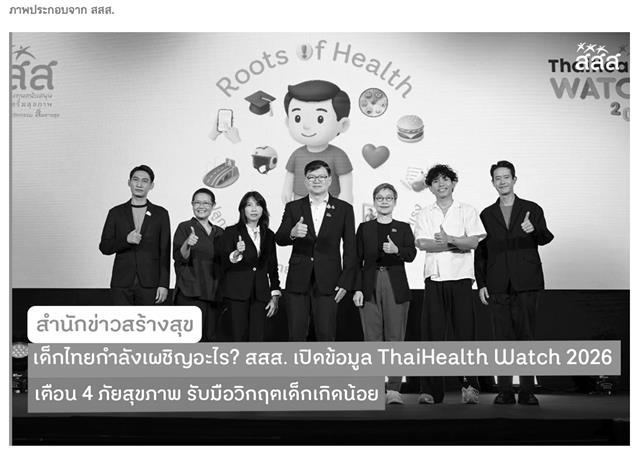
A recent update from the ThaiHealth Promotion Foundation (ThaiHealth) highlights findings from ThaiHealth Watch 2026, calling for renewed focus on children and youth in the context of Thailand’s declining birth rate. The report flags four priority risks to watch in 2026:
(1) early childhood development (0–6 years), emphasizing stronger early investment and supportive environments such as community play spaces;
(2) childhood obesity, described as a pattern shaped by home and school environments, with wider implications for NCD risk and learning;
(3) online gambling among youth, warning that early exposure can escalate into harmful debt and addiction and underscoring the need for media literacy and stronger protective measures; and
(4) road safety, particularly motorcycle-related deaths and very low helmet use among children, prompting calls for expanded local initiatives such as helmet-bank models.
|
|
|---|
|
The Parliament Building, representatives from the Department of Women’s Affairs and Family Development (DWF) participated in a meeting with the Senate Subcommittee on Women’s Affairs and Gender Diversity, under the Senate Standing Committee on Social Development and Affairs
|
|
|---|
|
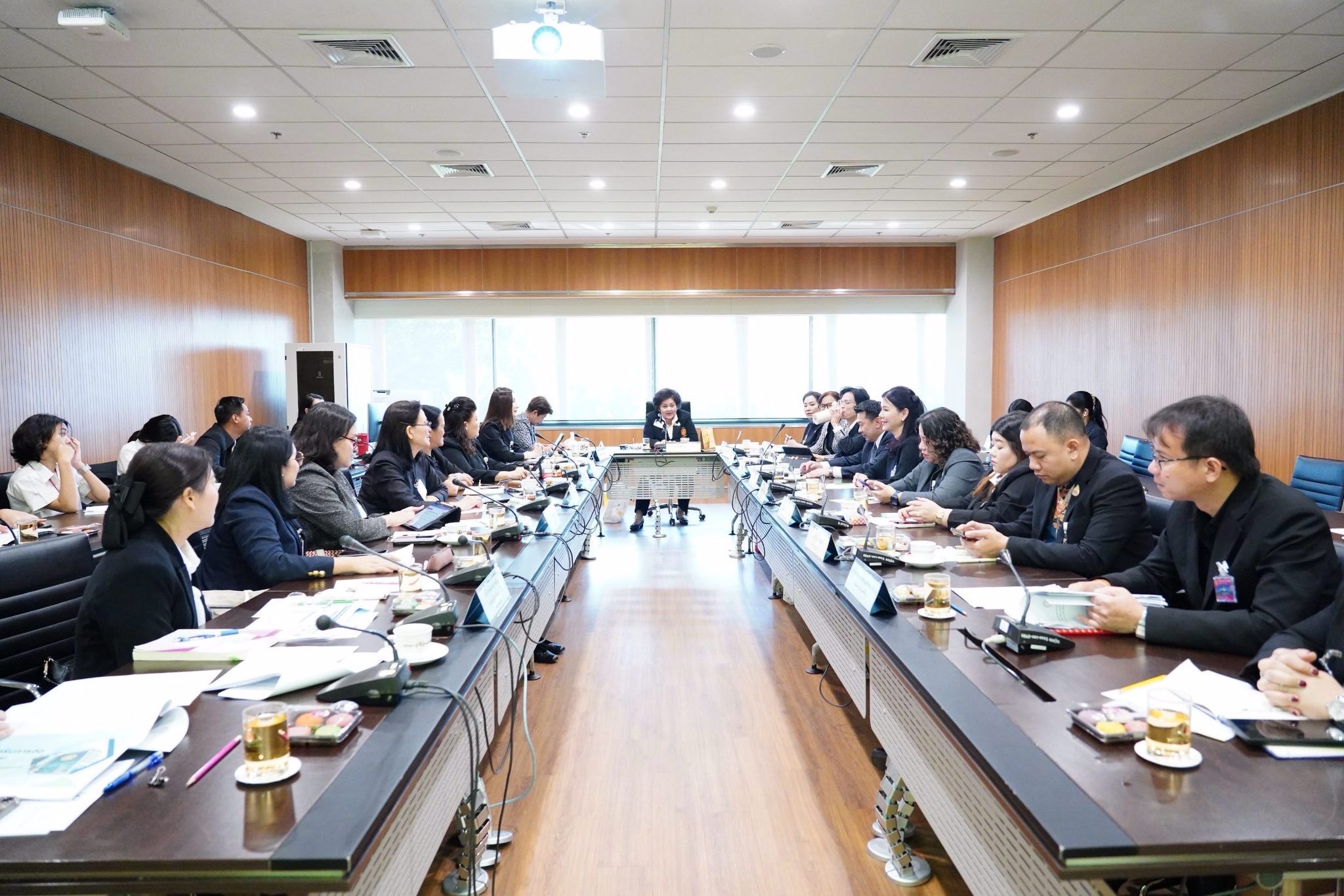
In the morning of 23 December 2025 at the Parliament Building, representatives from the Department of Women’s Affairs and Family Development (DWF) participated in a meeting with the Senate Subcommittee on Women’s Affairs and Gender Diversity, under the Senate Standing Committee on Social Development and Affairs relating to children, youth, women, older persons, persons with disabilities, disadvantaged groups, and social diversity. The meeting was chaired by Ms. Ajala Na Ranong.
On behalf of the Director-General of DWF, Ms. Jatuporn Rojanapanich, Ms. Natya Worachina, Director of the Bureau of Family Institution Promotion, attended to provide information to support the Subcommittee’s review and follow-up on approaches to strengthening women’s roles at the community level in driving the prevention and response to domestic violence. The discussion highlighted the use of the Ministry of Social Development and Human Security (MSDHS) volunteer mechanism (VSD/M), as a key community-based platform for implementation. Ms. Krusadee Boonsuaykhwan, Director of the Rights Protection and Safeguarding Group, and Ms. Kantthida Khunchit, a Social Development Officer (Practitioner Level), also joined the meeting.
The meeting reflects ongoing collaboration between government agencies and the legislature to strengthen community-based, system-oriented approaches that empower women and support more concrete progress in preventing domestic violence.
|
|
|---|
|
1. Free fun and learning for children and families!
Families are invited to join National Children’s Day Week × Mahidol Kaset Fair 2026, under the theme “Children are the future of a sustainable world.” The event will take place on 10–18 January 2026 at the National Institute for Child and Family Development (NICFD), Mahidol University.
Enjoy the “TREE OF THE LAND – 7 Levels of Learning” exhibition, creative activity zones, hands-on workshops, and chances to win prizes. Admission is free throughout the event. Please register in advance at: https://form.jotform.com/253508165380053.
Let’s create a learning space for a more sustainable future for Thai children. No plastic bags will be provided—children and families are kindly encouraged to bring reusable tote bags.
|
|
|
|
|
2. Net PAMA
Good news for parents and caregivers in Khon Kaen!Parents/caregivers of children aged 3–15 years are invited to join the “Parent Classroom: Learning to Promote Positive Behavior (Net Pa Ma)”. Sessions are held once a week, every Wednesday, 1:00–4:00 p.m., at the Physiotherapy Room (2nd floor), Cheewaphiban Center, Khon Kaen Hospital 2 (Wat Sirithammikawas Branch).
This is a step-by-step, connected learning series covering key topics such as foundational factors in child behavior change, positive communication skills, praise techniques, reward systems, appropriate discipline, point/token systems, and how to integrate all techniques together for practical everyday use at home. Free of charge (limited seats). Register here: https://forms.gle/EtxHDB7rjfVaChZA8
|
|
|
|
|
3. The Rajanagarindra Institute of Child Development, together
It’s back! “Positive Parenting Fun Run #4 (Run with Your Child)”
Thailand’s Department of Mental Health, through the Rajanagarindra Institute of Child Development, together with the ThaiHealth Promotion Foundation and partner networks, invites families to join the Positive Parenting Fun Run #4 on Sunday, 25 January 2026, from 5:30–10:30 a.m. at the Army Veterinary Department (Animal Battalion), Don Kaeo Subdistrict, Mae Rim District, Chiang Mai.
Families are encouraged to join with at least one parent/caregiver and at least one child aged 2–15 years. The event combines physical activity with learning and practicing positive behavior and positive parenting. Each registered family will receive two event T-shirts.
Registration opens on Monday, 17 November 2025 at 10:00 a.m. Participation is free of charge (limited slots). Please stay tuned for registration details via the “Por-Mae Liang Buak (Positive Parenting)” Facebook
page;https://www.facebook.com/PositiveParentRICD
|
 |
|
|
|
|
5. Cultural Adaptation of Parenting Interventions: Formative Evaluation in Thailand
Authors: Amalee McCoy; Jamie M. Lachman; Amanda Sim; Catherine L. Ward; Sombat Tapanya; Frances Gardner
Methodology:Formative evaluation (qualitative research) Journal: Research on Social Work Practice Year: 2025
Click here for future study: DOI: 10.1177/10497315251396793 Mahidol Repository+1 |
|
|
|
|
1. Unpacking Parenting Intervention Content for Child Maltreatment: A Systematic Review Examining Core Components
Authurs:
Fatima Younas; Leslie Morrison Gutman
Research Methodology: Systematic review
Journal: Trauma, Violence, & Abuse
Year: 2024
Click here for future study:
DOI: 10.1177/15248380241305572 PubMed |
|
|
|
|
2. Parenting programs for adolescent parents: a mixed methods systematic review of global interventions and evidence gaps
Authors: K. (Katherine) Morse; M. Martin; R. Kruyer; C. Tatham
Research method: Mixed methods systematic review
Journal:
Vulnerable Children and Youth Studies
Year: 2025
Click here for future study: https://www.tandfonline.com/doi/full/10.1080/17450128.2025.2587205 |
|
|
|
|
World Bank (2025):
Parenting Programs to Promote the Nurturing Care of Children: Essential Considerations
This guidance note provides practical, end-to-end recommendations for designing, implementing, and evaluating high-quality, scalable parenting programs, with a strong focus on low- and middle-income settings.
Key takeaways
-
It positions nurturing care (health, nutrition, safety/protection, early learning, and responsive caregiving) as a cornerstone of child development—and highlights persistent gaps in access to minimally adequate nurturing care.
-
It emphasizes that “what works” depends heavily on implementation quality: conducting a situational assessment, building an evidence-informed theory of change, integrating delivery into existing systems (health/education/social protection), defining target groups and dosage, strengthening facilitator training and supervision, and establishing robust monitoring and evaluation.
-
A distinctive contribution is its focus on costing and scale-up decisions, including guidance on collecting cost data and cross-country case examples (e.g., Uganda, Nigeria, Panama, the Philippines, The Gambia, Peru) to inform budgeting, feasibility, and cost-effectiveness.
Why it matters for Thailand: The note can support program adaptation and scale-up while safeguarding fidelity—and strengthen policy dialogue through clearer costing and value-for-money arguments.
For more information, please visit ; https://documents.worldbank.org/en/publication/documents-reports/documentdetail/099062025201016658
|
|
|
|
|
|
A new WHO technical report,
Corporal Punishment of Children: The Public Health Impact (published 11 August 2025), highlights the widespread use and serious consequences of corporal punishment.
WHO estimates that around 1.2 billion children (0–18 years) are subjected to corporal punishment at home each year, with substantial prevalence also reported in schools in many settings. The report underscores that physical punishment is associated with lasting harm to children’s health, learning, and well-being, and that there are no proven benefits.
WHO calls for urgent action to prohibit corporal punishment in all settings, alongside practical support for parents, caregivers, and teachers to adopt positive, non-violent discipline approaches that foster safer, more nurturing environments for children.
For more information, please visit ;
https://iris.who.int/server/api/core/bitstreams/01d2e03b-f891-44f2-9272-144508effaef/content
|
|
|---|
|
UNICEF, in collaboration with Parenting for Lifelong Health (PLH) and with support from Global Initiative to Support Parents (GISP)
partners—WHO, ECDAN, and IRC—has developed the Global Parenting Support Framework (the “Global Conceptual Framework for Universal Parenting Support”).
It sets out a unified life-course, multisectoral vision to strengthen parenting policies, systems, and services worldwide. Grounded in children’s rights and informed by global evidence, the Framework provides practical guidance to align policy, financing, workforce development, and service delivery around one goal: ensuring families have access to the support they need to raise children in safe, nurturing, and protective environments.
It promotes a systems approach across health, education, social protection, child protection, and community-based services, and encourages countries to move from fragmented initiatives toward integrated national systems that combine universal, targeted, and intensive parenting support.
The Framework builds on UNICEF ECARO’s Parenting Support Framework for the Early Years and extends it for global relevance through a life-course lens, with applicability across diverse contexts, including humanitarian settings.
For more information, please visit ; https://www.unicef.org/media/176766/file/revised%20global%20framework.pdf.pdf
|
|
|
|
|
|
A new OECD policy brief, “Paid leave for fathers,”
highlights that although fathers still take parental leave far less than mothers, many countries are rapidly expanding paid paternity leave and father-earmarked parental leave to change uptake and promote a more equal sharing of care.
As of April 2024, 35 out of 38 OECD countries provide some form of paid leave for fathers. Paid paternity leave is typically short (averaging 2.4 weeks), while some countries have expanded entitlements significantly—for example, Spain offers 16 weeks. The brief also summarises evidence that fathers’ leave-taking is associated with higher maternal employment, greater paternal involvement in childcare and housework, and improved family well-being.
OECD recommends strengthening design and delivery to boost uptake—particularly through non-transferable father-specific leave (often framed as a “daddy quota”), adequate wage replacement, and measures that reduce financial and workplace barriers so fathers can use leave in practice.
For more information, please visit ; https://www.unicef.org/media/176766/file/revised%20global%20framework.pdf.pdf
|
|
|
|
|
|
UNICEF Innocenti’s working paper,
Protecting Children in Online Gaming: Mitigating Risks from Organized Violence (Oct 2025),
authored by Galen Lamphere-Englund, highlights that online gaming is a central social space for many children, but is increasingly being exploited by violent non-state armed groups and hybrid criminal networks to propagandize, groom, recruit, and organize young players.
The paper emphasizes that gaming is not inherently harmful and should not be framed as a direct cause of violence; rather, gaming’s social and technical infrastructure is being misused at scale, requiring stronger prevention, detection, and response to protect children’s right to play and to be safe from violence.
Key recommendations span multiple actors: advancing research and child-centred digital policy (aligned with Committee on the Rights of the Child General Comment No.25), integrating gaming-related harms into national child protection and online safety frameworks, investing in prevention and digital/media literacy, and—critically—calling on gaming companies to adopt safety-by-design, strengthen age assurance and parental controls, improve child-friendly reporting and trust-and-safety operations, and increase transparency through regular safety reporting.
For more information, please visit ; https://www.unicef.org/innocenti/reports/protecting-children-online-gaming
|
|
|
|
|
|
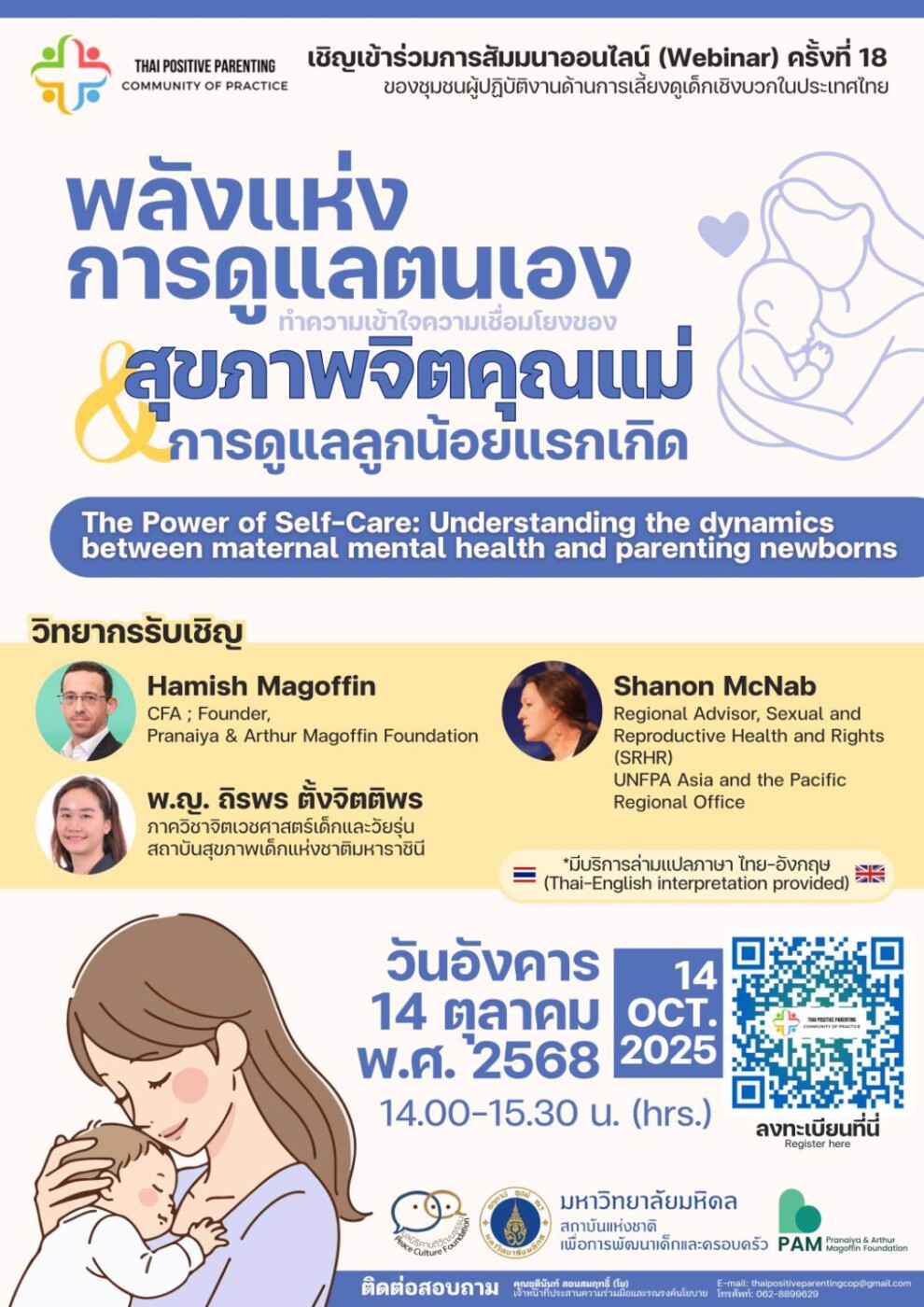 |
Webinar #18 of the Thai Positive Parenting Community of Practice (TPP CoP)was held on 14 October 2025, from 14:00–15:30. Co-organized with the Pranaiya & Arthur Magoffin Foundation (PAM),
featured the topic “The Power of Self-Care.” The session explored the link between mothers’ mental health and newborn care, emphasizing that supporting mothers’ well-being is a critical foundation for safe and nurturing caregiving from the earliest stages of a child’s life.
The webinar brought together perspectives from civil society and regional SRHR leadership through Hamish Magoffin and Shanon McNab (UNFPA APRO), alongside clinical insights from Dr. Thiraporn Tangjittiporn, a child and adolescent psychiatrist, to connect evidence with practical experience.
Participants gained practical guidance on promoting self-care and strengthening support systems around mothers, as well as reflections for service delivery and policy work to protect maternal mental health and improve the quality of newborn care in the Thai context.
Webinar video record Link: https://youtu.be/Qh3rcfZ0a3k?si=qYenhGgOg0GvQBIp
|
|
|
|
|
|
Webinar #19 – Thai Positive Parenting Community of Practice (TPP CoP)
Co-organized by Net PAMA, the Nan Provincial Public Health Office, and Pak Khat Hospital (Bueng Kan Province)
Date & time: Tuesday, 23 December 2025, 2:00–3:30 p.m. (Thailand time)
Topic:
Parenting Programme Facilitators’ Perspectives: Professional Development and Lived Experiences of Improving the Lives of Parents and Children
This webinar explored both (1) professional skill development among programme facilitators and (2) real-world field experiences that reflect the power of positive parenting programmes to improve the quality of life of Thai families across diverse contexts.
Guest speakers:
1. Assoc. Prof. Dr. Sunisa Wong-aree; Lecturer, Faculty of Education, Udon Thani Rajabhat University (Net PAMA programme representative)
2. Ms. Suangsudoa Pongkaew; Professional Nurse (Senior Level), School-age and Adolescent Health Promotion Unit, Nan Provincial Public Health Office (Chalad Rak, Chalad Liang programme representative)
3. Ms. Pradabdao Amatmontri; Professional Nurse (Senior Level), Pak Khat Hospital, Bueng Kan Province (PLH programme representative)
Webinar video record Link: https://youtu.be/b4Vs6Hlh6-8?si=QU6ycXo3DPbf3ZyS
|
|
|
|
|
1. The Early Childhood Development Action Network (ECDAN)
has launched Phase Two of the Childcare4All Campaign, a global effort to strengthen childcare systems through collaboration, evidence, and advocacy. Phase Two introduces three core elements: (1) the Systems Thinking for ECD Collaborative, bringing leading organizations from Asia and Africa together to apply systems thinking to ECD; (2) the Childcare Systems Map, a global public good designed to support holistic advocacy and policy design; and (3) the CARE Initiative (Childcare Advocacy, Research, and Engagement), which supports multisectoral coalitions in Bangladesh, South Africa, and
Tanzania to advance coordinated national campaigns.
To enable practical use of the Childcare Systems Map, ECDAN is also offering a four-month interactive course for country consortia and government entities to learn how to adapt the map to local contexts and drive coordinated, evidence-informed advocacy for accessible, affordable, and high-quality childcare.
For more information, please visit;
https://ecdan.org/press/opportunity-to-join-ecdans-childcare-systems-map-course/
|
|
|---|
|
2. The Global Caregiver Forum will take place in Madrid
During 15–16 January 2026, in order to convene a select group of champion countries, multisectoral bodies, private sector corporations and foundations, thought leaders, scientists, and public figures on evidence-based parenting.
The Forum is co-hosted by UNICEF and the World Health Organization (WHO), in the presence of Her Majesty the Queen of Spain, and supported by the Global Initiative to Support Parents (GISP), the Spanish Ministry of Foreign Affairs, the Spanish Development Agency (AEICD), and the LEGO Foundation.
The forum is organized in collaboration with key partners, including the International Rescue Committee (IRC), the Early Childhood Development Action Network (ECDAN), Parenting for Lifelong Health (PLH), and the University of Oxford.
For more information, please visit;
https://ecdan.org/events/caregiver-forum-in-spain/ |
|
|---|
|
3. Webinar: Parenting in Asia: Innovations, Challenges, and Pathways to Scale-Up (GPI)
Across Asia, parenting support programmes are transforming to meet families’ needs amid rapidly changing social, political, and economic landscapes.
The Global Parenting Initiative (GPI) convened an insightful webinar featuring experiences from China, Malaysia, the Philippines, Thailand, and Vietnam.
Academics and advocates discussed innovative approaches driving impact, implementation challenges across diverse contexts, and opportunities to scale up evidence-based parenting support across the region.
The webinar was moderated by Dr Amalee McCoy, with Dr Sombat Tapanya (Peace Culture Foundation) joining as the panellist representing Thailand.
Date & time: 15 October 2025 | 15:30–17:00 ICT (Thailand time)
Watch the recording: https://youtu.be/CqI_yQqj67o?si=DzZrjXe9JdX2zCr9
|
|
|---|
|
4. The Asia-Pacific Forum on Sustainable Development 2026 (13th APFSD)
Will take place on 24–27 February 2026 at the United Nations Conference Centre (UNCC), Bangkok. APFSD is ESCAP’s annual, inclusive intergovernmental platform for regional follow-up and review of progress on the 2030 Agenda and the SDGs, with outcomes feeding into the 2026 High-level Political Forum (HLPF) in New York.
The 2026 Forum will be held under the theme “Transformative, equitable, innovative and coordinated actions for the 2030 Agenda and its SDGs for a sustainable future for all.” It will conduct in-depth reviews of SDG 6, 7, 9, 11, and 17, and provide sessions to support countries presenting Voluntary National Reviews (VNRs) at the 2026 HLPF.
Note: Participation in plenary sessions and SDG roundtables is generally by invitation only; approved registrants may attend open side/associated events. Associated events are also scheduled on 23 February 2026.
For more information, please visit;
https://sdg.iisd.org/events/asia-pacific-forum-on-sustainable-development2026/ |
|
|---|
|
This newsletter is Issue No. 12 and the fourth issue of 2025. It is published in December 2025, and the next issue will be released in March 2026.
If you would like to share research updates, organizational activities, seminars, conferences, or related information in this newsletter, please send the details to the project coordinator, Ms. Chutinan Sornsomrit, at thaipositiveparentingcop@gmail.com.
Thank you for following our updates and continued engagement with the team at the Peace Culture Foundation.
|
|
|
|
|
|  |
|
|
|
|